Suspecting a spouse is one of the loneliest feelings there is, and it makes people do things that later hurt them badly: reading a phone, installing tracking apps, following someone in their own car, confronting a stranger in a parking lot. This guide explains how hiring a private investigator for a cheating spouse actually works in Florida — what is legal, what is not, what evidence matters and how to keep control of the cost.
First: what you should not do yourself
- Do not access their phone, email or accounts. Florida’s computer-crime and interception statutes and federal law can apply even between spouses. Screenshots taken that way are routinely excluded and can turn you from the wronged party into the defendant.
- Do not install spyware or tracking apps on a device you do not own.
- Do not put a GPS tracker on a car you do not own or co-own — it is a crime in Florida.
- Do not record conversations you are not part of. Florida requires the consent of all parties to record audio.
- Do not follow them yourself. You will be recognized, it can escalate, and your account of what you saw is far weaker than a licensed third party’s video.
- Do not confront the other person. Nothing good has ever come of it, and it can lead to a restraining order against you.
What a licensed investigator can legally do
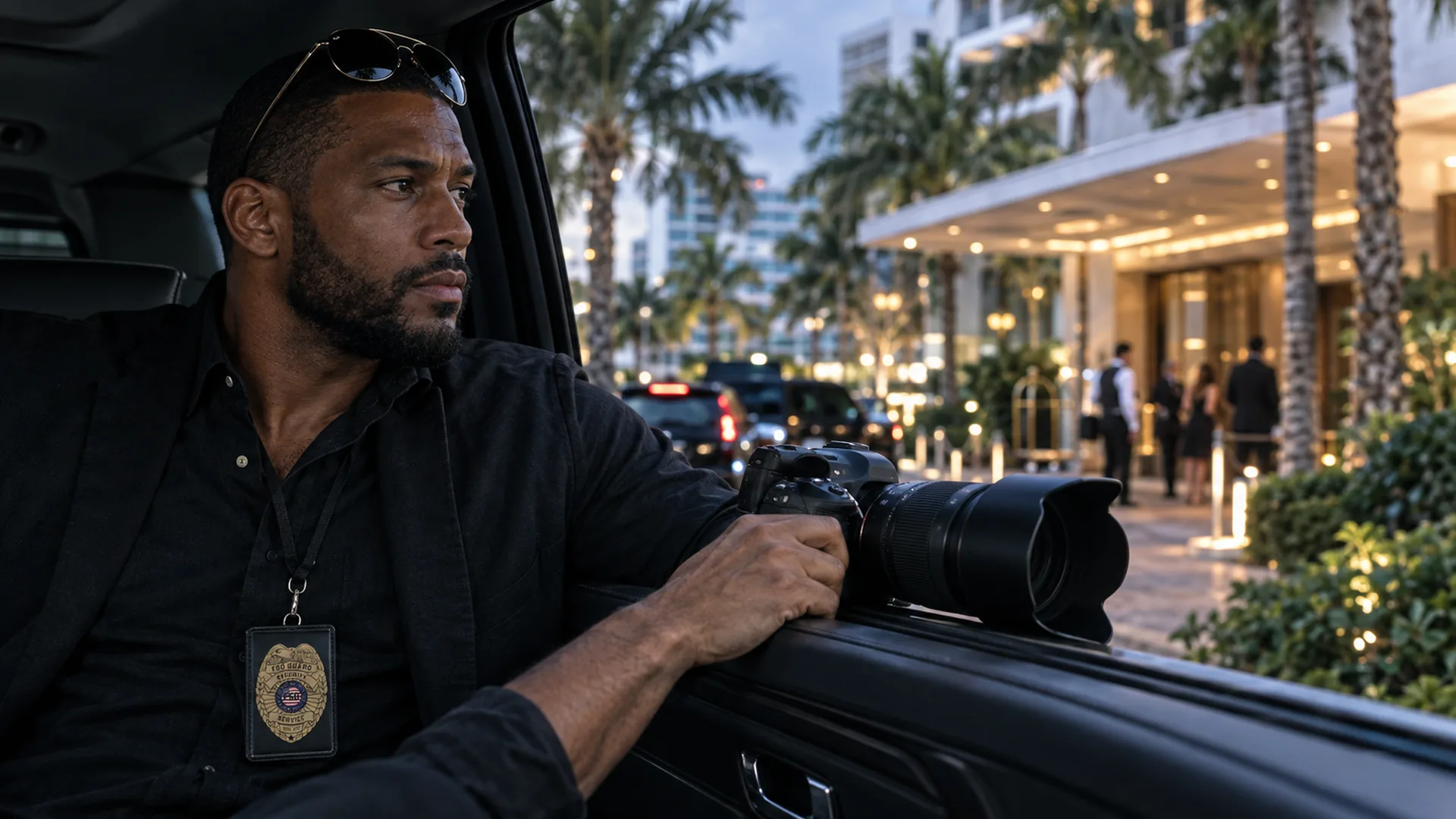
A Florida-licensed investigator works entirely in public: observing and recording your spouse in places where there is no reasonable expectation of privacy — streets, parking lots, restaurants, hotel entrances, gyms, a companion’s driveway seen from the road. They document who, where, when and how long with time-stamped, geotagged video and photos, and they research public records and open sources. They do not trespass, do not intercept communications and do not contact the subject. Read more on our surveillance and infidelity investigations page.

What evidence actually matters in Florida
Florida is a no-fault divorce state: you do not have to prove adultery to end the marriage, and a judge will not punish a spouse for cheating as such. So why document it? Three practical reasons your attorney may care about:
- Dissipation of marital assets. If marital money paid for the affair — hotels, gifts, trips, an apartment — the court can account for it when dividing property or setting alimony. Surveillance and records help establish the spending.
- Custody and timesharing. What matters is the children: were they left with the new partner, exposed to unsafe situations, present during overnights? Documentation of those facts can influence a parenting plan.
- Negotiating position. Most divorces settle. A spouse who knows the facts are documented negotiates differently than one who thinks it is your word against theirs.
There is also a fourth reason that has nothing to do with court: certainty. Many clients hire an investigator to end the not-knowing — and a meaningful share of investigations end with “we found nothing,” which is also an answer.
How the investigation is planned
- Confidential consultation — ideally after you have spoken to a family law attorney, who may hire the investigator on your behalf so the work is covered by attorney privilege.
- You bring the pattern. Which nights, which excuses, which places, which vehicle, photos of your spouse and any suspected companion. This is what makes the case cheap: investigators watch the right three hours instead of the wrong thirty.
- Written plan and budget. Number of sessions, one or two investigators, expenses, reporting.
- Surveillance. Unmarked vehicles, distance, video. Real-time updates if you want them — many clients prefer to wait for the report.
- Report. A chronology with time-stamped exhibits, delivered securely to you or your attorney; the investigator is available to testify.
What it costs and how to control it
Surveillance is billed hourly per investigator with a minimum block per session, plus mileage and expenses. The cost is driven by hours, and hours are driven by planning: a client who knows the pattern pays for a few sessions; a client who says “just follow him for two weeks” pays for two weeks. Two investigators cost more per hour but lose the subject less often in Miami traffic. Ask for a written estimate, a cap you approve before it is exceeded, and itemized statements. Our guide to private investigator costs in Florida goes deeper.
Choosing the investigator
- Verify the Florida license (Class C investigator working through a Class A agency) on the state lookup.
- Ask how they handle evidence, whether they testify, and how they deliver reports securely.
- Walk away from anyone who offers phone records, account access, or a tracker on a car you do not own.
- Prefer an agency that will tell you when surveillance is not worth it.
More on this in how to hire a private investigator.
After the answer
If the investigation confirms what you feared, the report goes to your attorney and the divorce process takes over. If you fear for your safety during a separation, FSO Guard also provides discreet protection and sweeps for trackers and hidden cameras — spouses in a bitter divorce are the most common source of both.
For a confidential conversation with a licensed investigator in Miami, Fort Lauderdale or West Palm Beach, call (786) 659-5011 or message us on WhatsApp. English, Spanish and Russian.