Everyone has seen a security guard. Far fewer people can say what one is actually supposed to do — or what they are legally allowed to do. If you are hiring security for a building, a business, a community or an event, it helps to know both, because the difference between a well-run post and a warm body in a uniform is the difference between prevention and a lawsuit. This guide explains what a security guard does, where their authority ends in Florida, what the Class D and Class G licenses mean, and what a good post looks like.
The five things every security officer does
1. Deter
The most valuable thing a security officer does is exist. A visible, alert, professional officer at an entrance, in a lobby, or patrolling a lot changes the math for shoplifters, trespassers, burglars and troublemakers. Most incidents that a good post prevents never show up in any report — which is exactly the point.
2. Observe and report
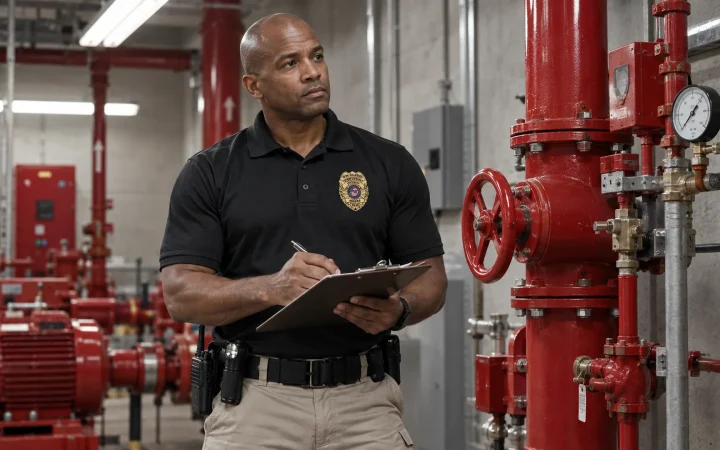
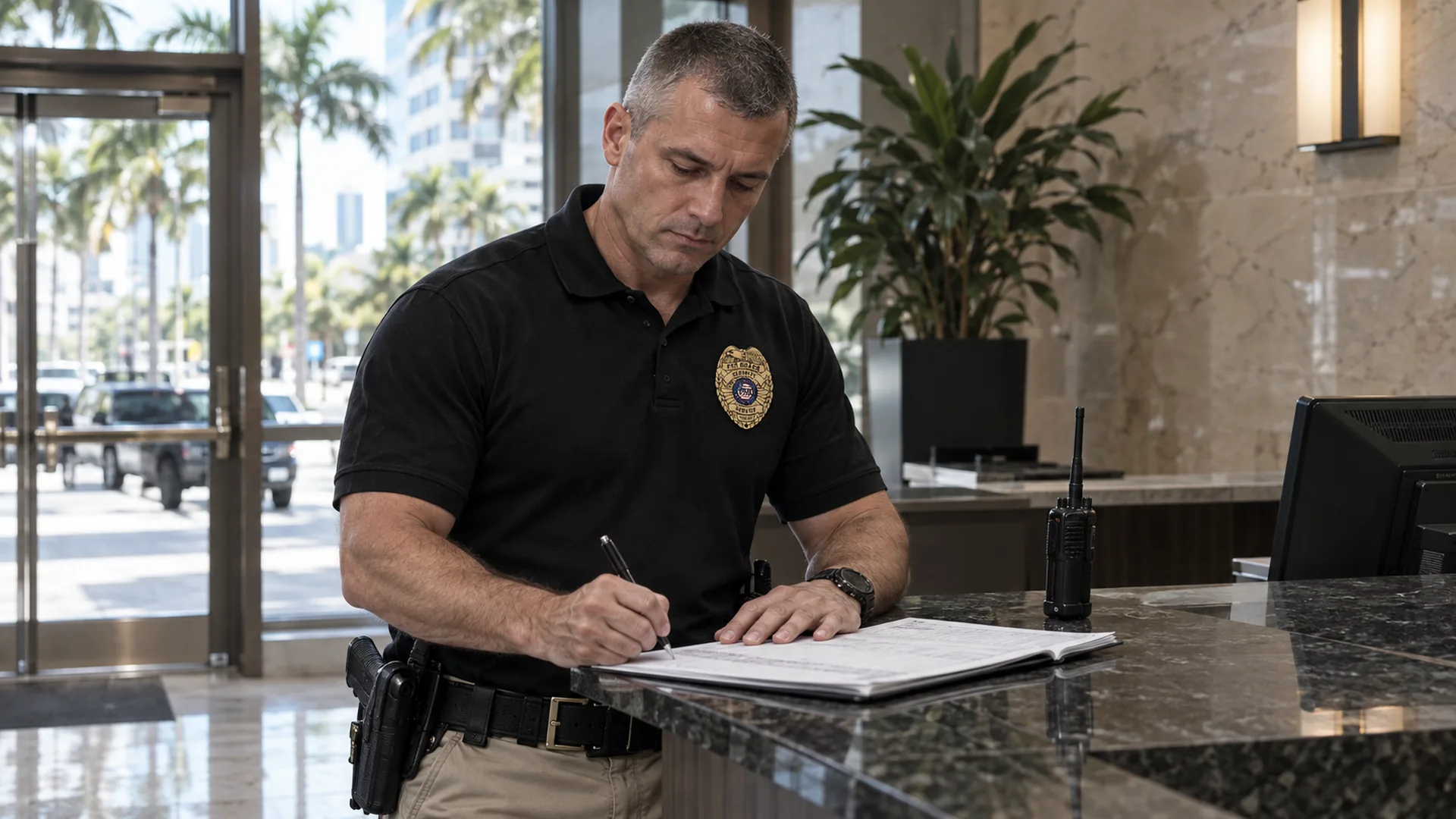
Officers watch — people, vehicles, doors, cameras, patterns — and write it down: daily activity reports, incident reports, visitor and vehicle logs, patrol logs with checkpoint scans. Those reports are what protect the property owner when there is a claim, a dispute or a police investigation.
3. Control access
Deciding who comes in: checking IDs and credentials, logging visitors and contractors, verifying deliveries, managing gates and lobbies, enforcing guest lists at events, keeping unauthorized people out of clinical areas or loading docks.
4. Patrol
Walking or driving the property on randomized routes, checking doors, gates, lighting, equipment and dark corners, scanning checkpoints, noticing what changed since the last round. See on-site patrol and mobile patrol.
5. Respond
Alarms, medical emergencies, disputes, intoxicated guests, trespassers, fires, storms. The officer’s job is to respond first, de-escalate, protect people, call the right agency and document — not to play police officer.
What the job looks like on different posts
- Condominium and lobby — resident recognition, visitor and vendor logging, packages, amenity rules, after-hours entry; see concierge security.
- Retail — visible presence, loss prevention, parking lot patrols, handling shoplifters within the law; see loss prevention.
- Construction site — overnight presence, gate and delivery control, photo documentation; see construction security.
- Warehouse — driver check-in, trailer logs, yard patrols, cargo theft prevention; see warehouse security.
- Events — crowd management, entrance screening, guest lists, de-escalation; see event security.
- Healthcare — waiting room presence, de-escalation, staff protection; see healthcare security.
- Gated community — gatehouse, roving patrol, HOA rule enforcement; see HOA security.
What a security guard cannot do in Florida
A security officer is a private citizen with a license, training and a uniform — not a police officer. In Florida they cannot:
- Make arrests beyond what any citizen may do, or issue citations.
- Search a person or their belongings without consent (bag checks at events are consent-based conditions of entry).
- Use force beyond what Florida law allows a private person in defense of self, others or, in limited ways, property.
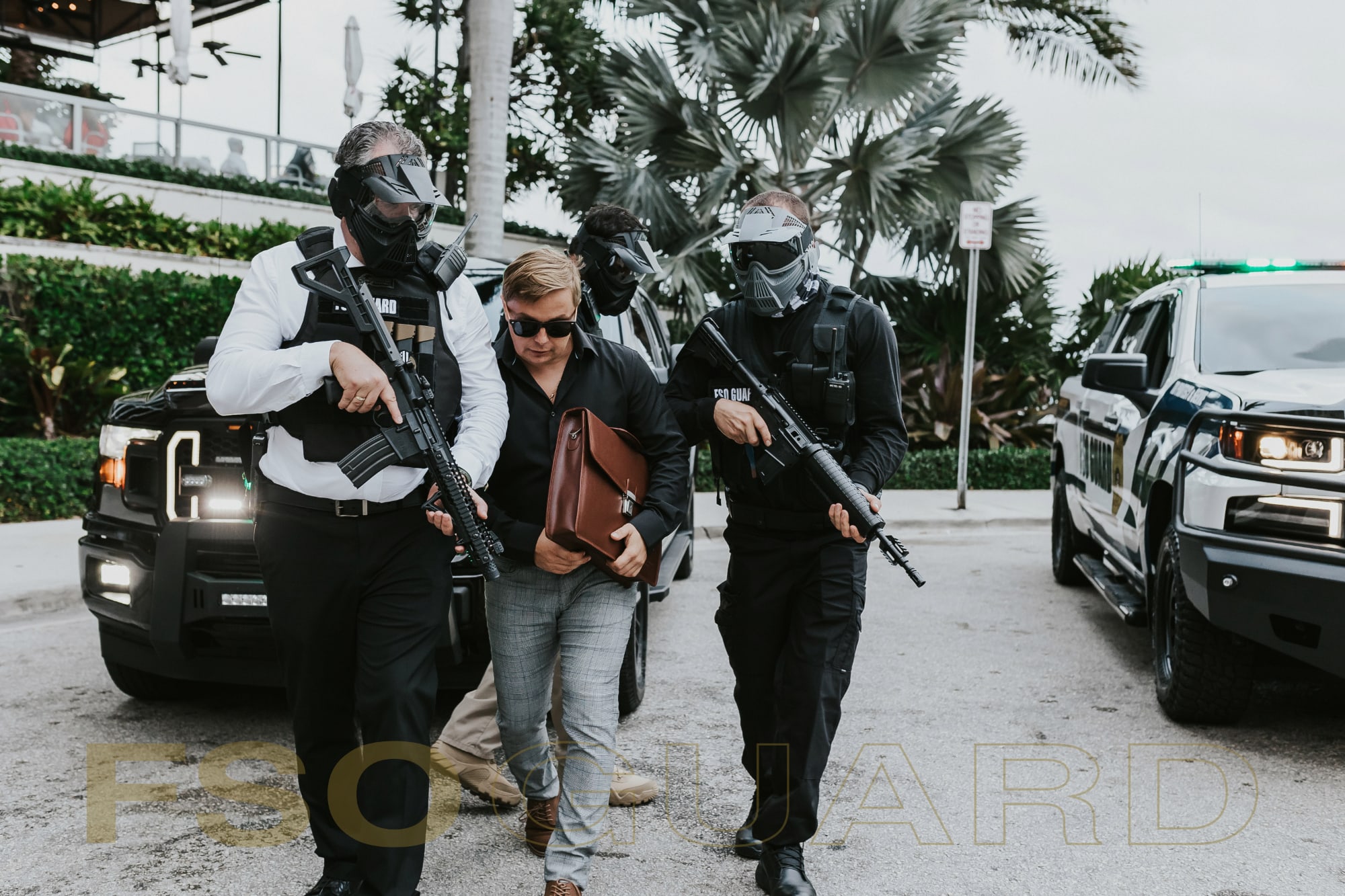
- Carry a firearm on duty without a Class G license — or carry one at all where the client or venue prohibits it.
- Pursue suspects off the property, block roads or run license plates in law-enforcement databases.
- Impersonate police in uniform, language or vehicle markings.
A guard who oversteps creates liability for the client. Good companies train officers to observe, report, de-escalate and call police — and to know exactly where the line is.
Licensing in Florida: Class D and Class G
Security officers in Florida are regulated under Chapter 493 of the Florida Statutes by the Department of Agriculture and Consumer Services. The Class D license is the basic security officer license: state-mandated training, fingerprints and a state and federal background check, renewed every two years. The Class G statewide firearms license is required in addition to carry a firearm on duty, with firearms training and annual requalification. Officers must work for an agency holding a Class B security agency license, which carries insurance requirements. You can verify any license on the state’s public lookup — and you should, before an officer stands on your property.
What separates a good post from a bad one
- Post orders — written, site-specific instructions: what to check, when, how to handle each scenario, whom to call.
- Supervision — unannounced visits, especially at night; check-in calls; a supervisor who actually reads the reports.
- Proof of presence — GPS, checkpoint scans, time-stamped photos. A sleeping night guard is the classic failure and the entire program should be built to prevent it.
- Presentation and manners — an officer who fits the site, greets people and stays calm.
- Stable staffing — the same officers who know the property, not a new face every night.
- Honest scoping — a company that tells you when a mobile patrol will do the job for a fraction of a full-time post.
What it costs
Security is billed per officer per hour, with the rate depending on armed or unarmed, hours, duration of the contract and the site. Our guide to security guard costs in Miami explains the factors, and how to choose a security company gives you the questions to ask.
Hiring licensed officers in South Florida
FSO Guard is a licensed Florida security agency (Class B) providing Class D and Class G officers across Miami-Dade, Broward and Palm Beach — with post orders, supervision, GPS-verified patrols and officers who speak English, Spanish and Russian. Call (786) 659-5011, message us on WhatsApp or see security guards in Miami.