A parking lot security checklist is most useful when it follows the person using the property. A functioning vehicle gate does little for someone who cannot find a lit route from their car to the lobby. Cameras provide limited reassurance if nobody knows who receives an alert or how to request footage after an incident.
For a Miami office, condominium, hotel or retail plaza, review the parking area as a connected system: vehicle entry, pedestrian movement, visibility, help points and response. This checklist is a starting point for a site-specific walk-through, not a certification that a property is safe.
Start with a daytime and an after-dark walk-through
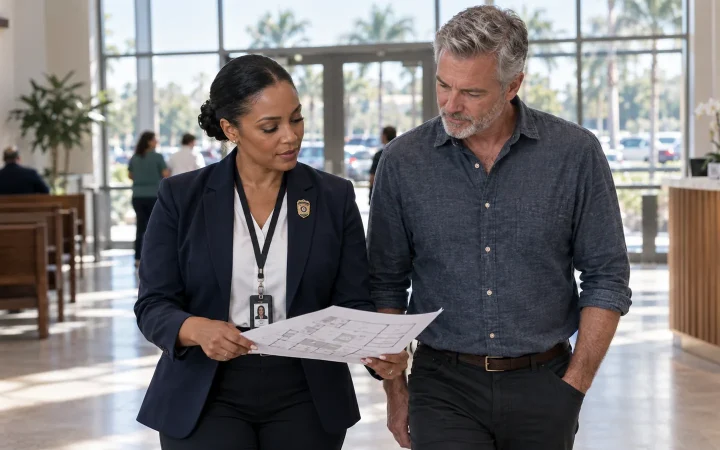
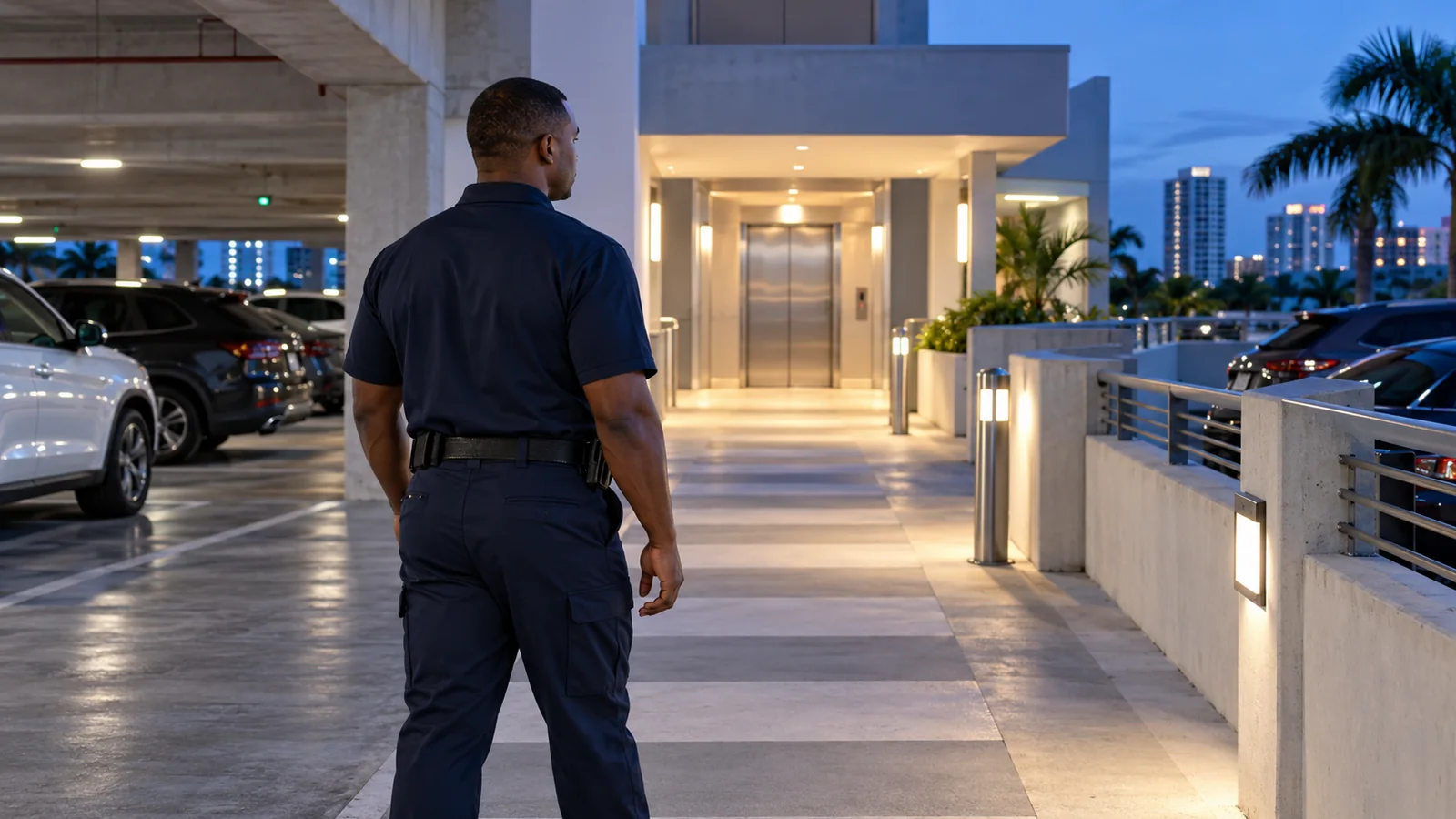
Invite the property manager, maintenance lead and security supervisor. Walk the routes used by employees, residents, visitors and delivery personnel. Include accessible parking, stairs, elevators, payment stations and the route to a public sidewalk. A route that is obvious in daylight can be confusing after a storefront closes or a light fails.
Record observations in a controlled worksheet. Give each issue a location reference, owner, priority and target review date. Keep detailed camera gaps, access arrangements and vulnerable locations out of public notices. Do not perform a walk-through alone in an unsafe area; arrange appropriate support and follow the property’s procedures.
Use this seven-part parking lot security checklist
- Lighting: identify failed fixtures, glare and abrupt changes in visibility along pedestrian routes. Ask a qualified professional to assess lighting performance; a brighter bulb is not automatically the correct solution.
- Visibility: note landscaping, stored materials or advertising that obscure sightlines. Coordinate changes with management rather than removing fixtures without approval.
- Vehicle and pedestrian access: check that entry arrangements match the current tenant and visitor process. Keep emergency access and exit paths available.
- Signs and wayfinding: make building entrances, permitted parking areas and ways to request help understandable to a first-time visitor.
- Cameras and communications: confirm that assigned staff know how to report a fault, request authorized footage and contact assistance. A camera on a wall does not prove that it records usable images.
- People and coverage: identify who observes the area during busy arrivals, late departures and quiet periods. Separate valet, maintenance and security responsibilities.
- Follow-up: assign unresolved issues and verify completion. Repeated observations need an operational decision, not another identical checklist.
Write the response plan before buying more equipment
For each help point or monitored alert, ask who receives the call, what location information they get and what happens if the first contact is unavailable. Test equipment through its approved test procedure. Do not place test calls to emergency services unless specifically arranged with the responsible authority.
Separate urgent threats from routine service issues. Immediate danger requires emergency assistance. A broken payment machine, parking dispute or lost vehicle location may need a property representative. Staff should know the difference and how to escalate without making promises outside their role.
Choose patrol coverage around the work that must be done
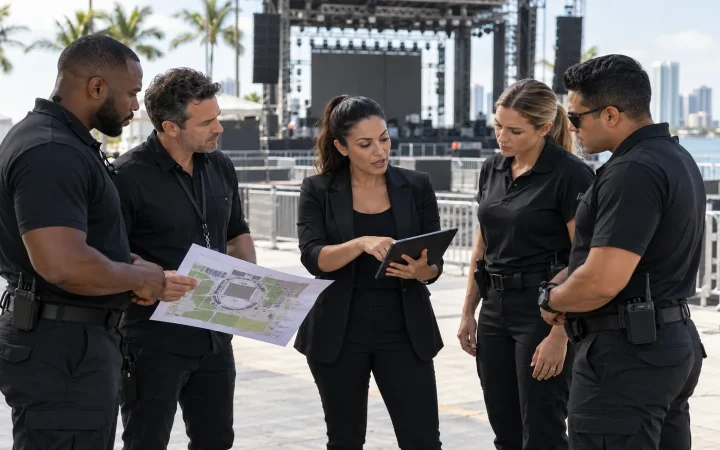
A dedicated officer, a roving building officer and periodic vehicle patrols provide different kinds of coverage. Define the required work first: observing an entrance, responding to help requests, checking assigned areas or supporting late departures. One officer cannot remain at a fixed entrance and continuously cover a separate garage at the same time.
Ask what is covered between scheduled visits, how relief is handled and how exceptions are reported. Our mobile patrol service page explains the coverage model; the patrol report review checklist helps you evaluate the records afterward.
Connect incidents to a specific corrective action
Use a restricted incident register to identify recurring locations, equipment faults and response problems. Do not draw conclusions from appearance or assume that a visitor is suspicious because they are unfamiliar. Document observable conduct and the circumstances relevant to the reported event.
For example, several reports of visitors unable to find the lobby could justify better wayfinding. Repeated reports of a door not closing require maintenance review. A report that a help station went unanswered requires an immediate check of the communication process. These are illustrative examples, not FSO client incidents.
Set a practical review schedule
Review the checklist after changes in tenancy, operating hours, traffic patterns or layout, and after a significant incident. For South Florida properties, include access changes caused by heavy rain or storm preparation in the management briefing. Security personnel should report unsafe conditions, not enter flooded or otherwise hazardous areas to finish a patrol.
Keep the first review simple: which issues were fixed, which remain open and whether staff can explain the response plan. CISA’s Vehicle Incident Prevention and Mitigation Security Guide is additional reading on evaluating vehicle-related risks and protective design. It does not replace a property-specific assessment.
Plan parking-area coverage with FSO Guard
Send the property type, operating hours, current concerns and whether you need continuous or periodic coverage. Contact FSO Guard to discuss a walk-through and a defined scope. Keep detailed access codes and sensitive security information out of an initial public inquiry. Browse our security planning guides for related management checklists.