Every congregation in Florida has had the conversation: after the news of another attack on a church or synagogue somewhere in the country, somebody asks, “What would we do?” The honest answer at most houses of worship is “we are not sure”. A church security plan is how you replace that uncertainty with a few clear habits, without turning a place that is supposed to feel open into a fortress. This guide walks through the elements of a working plan, in the order we recommend building them, and ends with when it makes sense to bring in a licensed security company.
Start with a risk assessment, not with a weapon
The first step of any church security plan is understanding what you are actually protecting against. Walk the campus with three or four people, including a pastor or rabbi, an administrator, a facilities person and, ideally, someone with a law-enforcement or security background, and write down what you see:
- Who and what could be a target: the congregation during services, the clergy, the children’s ministry, cash from offerings, the building and its contents, vehicles in the lot.
- What has already happened: break-ins, vandalism, disruptive visitors, medical emergencies, a former member with a grievance, threatening messages online. Past incidents are the best predictor of future ones.
- How people and vehicles move: how many doors are unlocked during a service, whether anyone watches them, where the children are, how long it takes to get from the parking lot to the sanctuary.
- What is visible from the street: an open door, an empty greeter’s post, an unlit parking lot, a poster with the clergy’s name and schedule.
- Local context: the neighborhood’s crime profile, the proximity of police and EMS, and the specific climate for your faith community. Synagogues, Chabad centers and mosques in South Florida plan for threats that a suburban Baptist church may not face at the same level.
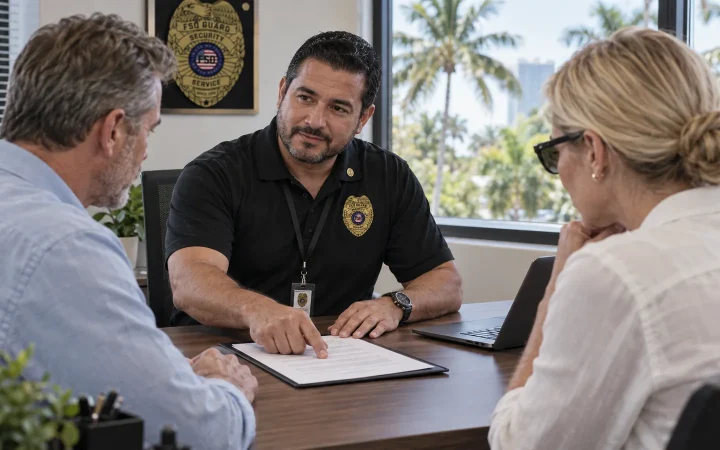
Rank what you found by likelihood and by consequence. Most churches discover that the likely problems, including a medical emergency during a service, a break-in on a weeknight, a disruptive or intoxicated visitor, and a custody dispute in the children’s wing, are not the dramatic ones, and that fixing them also builds the habits that matter in the rare worst case. Larger congregations often have this assessment done by a licensed firm; see security consulting and risk assessment.
Build the church security team
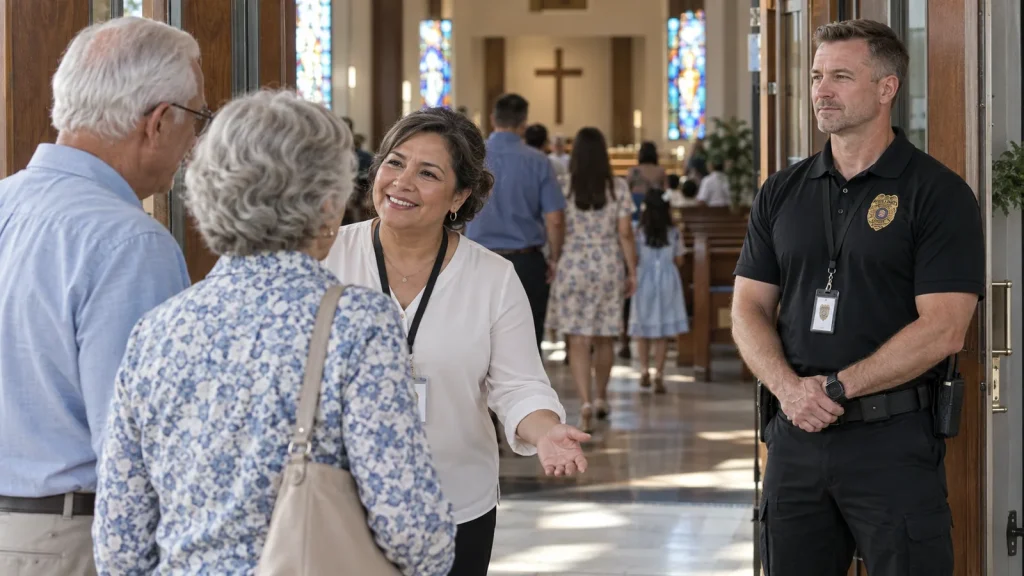
A church security team is mostly about people paying attention, not about force. The best teams look like an extension of the hospitality ministry: friendly people at the doors who greet everyone, notice what does not fit and know exactly whom to tell.
- Recruit deliberately. Look for calm, observant members with good judgment (retired law enforcement, military, nurses, teachers, security professionals). Screen them: a background check and a conversation with the pastor are the minimum. Enthusiasm for weapons is not a qualification.
- Define positions. A team lead for each service, greeters at every unlocked door, a floater inside the sanctuary, a person in the children’s area, a person in the parking lot. Write a one-page description for each: where to be, what to watch, what to do, whom to call.
- Schedule like ushers. Nobody serves every week; a tired team stops noticing. Publish a rota and have a backup.
- Communicate. Inexpensive radios with earpieces, or a group chat for the team lead and the pastor, plus one agreed phrase that means “I need help here now”.
- Train and practice. Quarterly sessions on de-escalation, recognizing suspicious behavior, medical response and the active-threat procedure. Practice with the ushers and the children’s ministry, not just the team.
- Decide the weapons question on purpose. Under section 790.06(13), Florida Statutes, licensed concealed-carry holders may carry on a religious institution’s property unless it says otherwise; so the real question is not whether guns are present, but whether your team’s role with them is defined. A license is not training, and a volunteer has no more legal authority than any other member. Many congregations keep volunteers unarmed and place a licensed armed officer at the main entrance instead. Whatever leadership decides with counsel, write it into the plan.
Doors, parking and the building
Physical security for a house of worship is a balance: the front door must feel open, and the other eleven doors must be closed. The church security checklist we use starts here:
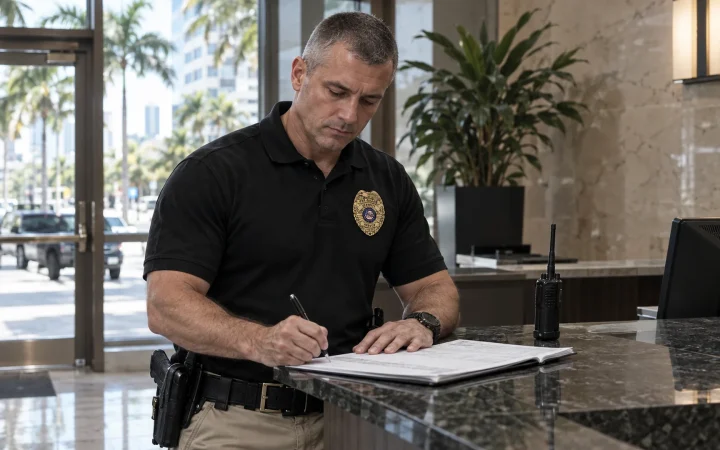
- One main entrance during services, with greeters; all other exterior doors locked from outside but always openable from inside (fire code first). Check them before every service.
- Delay and observe. Lock the sanctuary or hall a few minutes after the service begins, with a greeter who can let latecomers in after a look: a friendly “welcome, come on in” is also a screening moment.
- Lighting and cameras. Light the parking lot, the entrances and the walk from the lot. Cameras on the entrances, the lot and the children’s wing, recorded, with someone who knows how to pull the footage.
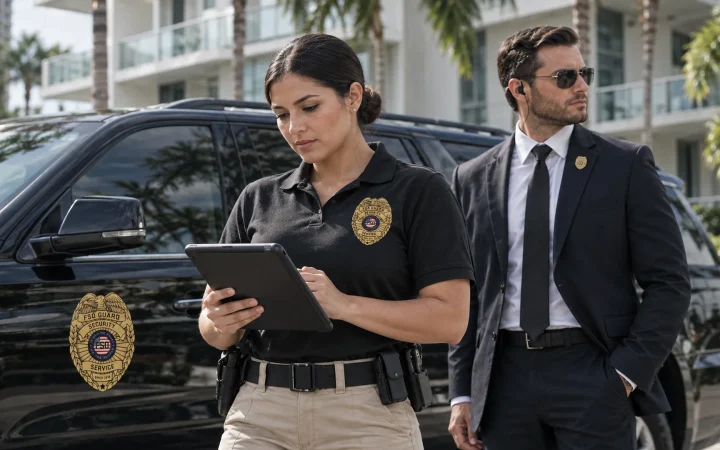
- Parking lot presence. A volunteer or officer in the lot during arrival and departure deters break-ins, helps elderly members, notices the car that has circled twice and is the first to see anything approaching the building.
- Offerings and cash. Two people count, in a locked room, with a safe; vary the route and time of bank deposits; never let one person carry cash alone to a car.
- Weeknights and the empty building. Most church property crime happens when nobody is there: copper, electronics, vehicles, vandalism. Alarm, lighting and a mobile patrol that checks the campus on random nights are cheaper than replacing the sound system.
- Keys and access. Know who has keys, retire the ones held by former staff, and consider electronic access for the office, the children’s wing and the sanctuary.
Protect the children’s ministry
Parents judge a church’s safety by the children’s wing, and they are right to. The essentials are simple: check-in and check-out with a matching tag so a child leaves only with the adult who brought him; two screened adults in every room, never one alone; a locked door between the children’s area and the public hallway during services; a written procedure for a custody dispute (know which parent has the court order, and call police rather than argue); and a team member posted at the wing’s entrance. Religious schools and daycares on the campus add weekday hours and their own regulations; see school and campus security.
Medical emergencies: the most likely event
Ask any congregation that has run a security team for a few years what they have actually responded to, and the answer is medical: cardiac events, falls, diabetic episodes, heat in the parking lot. Your plan should include an AED in a known, marked location; a first-aid kit that someone checks; several members trained in CPR and first aid (nurses and physicians in the congregation are your best resource; ask them); a clear rule about who calls 911 and who meets EMS at the door; and a way to keep the service moving or pause it with dignity. These are the same skills and the same radio discipline the team will use in a worst case, which is why medical response is where good church security training starts.
Disruptive visitors and the active-threat plan
Between the medical emergency and the nightmare scenario sits the most common security event: the visitor who is intoxicated, mentally unwell, angry at the church or simply determined to interrupt the service. The plan should say who approaches (two people, calmly), what they say, where they take the person, and when to call police. Most of these end with a cup of coffee in the lobby; the plan makes sure the ones that do not are handled by people who have thought about it.
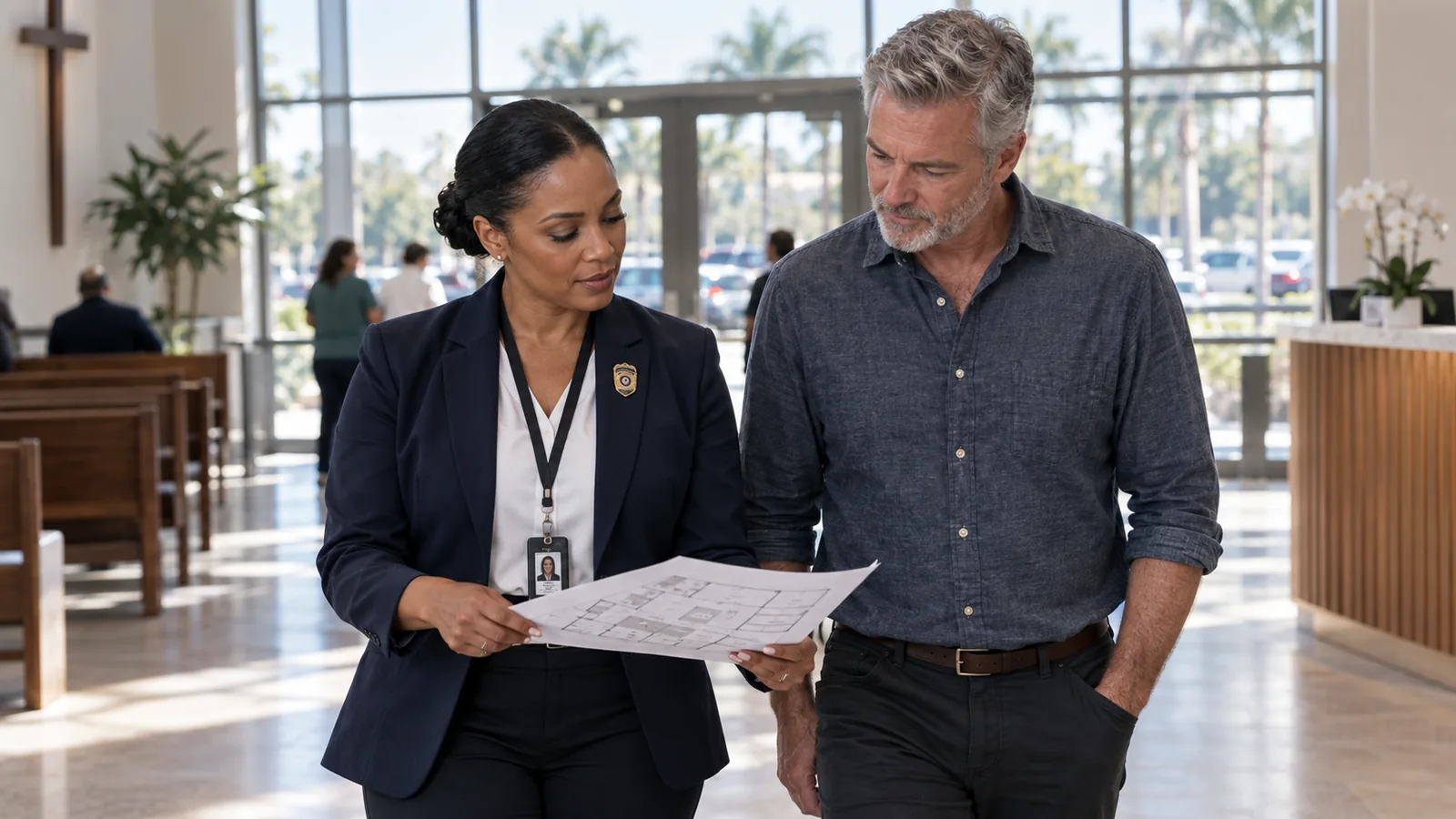
For a violent threat, keep the procedure short enough that people remember it under stress. A common structure is Run, Hide, Fight adapted to the building: which exits, which rooms lock, how the children’s wing locks down, who gives the announcement, what the announcement says, and how the team communicates with police when they arrive (hands visible, no weapons drawn, someone meeting them with a floor plan). Practice it, with the congregation informed and in daylight, at least once a year. Coordinate with your local police department; many South Florida departments will walk the campus with you and review the plan.
Write it down, then keep it alive
A workable plan fits in a binder and on a shared drive: the risk assessment and its priorities; the team roster, positions and rota; the pre-service checklist for doors, lighting and the children’s wing; the procedures for medical events, disruptive visitors, custody disputes, severe weather and active threats; emergency contacts; and the annual training and drill calendar. Review it every year and after every incident. Share the parts the congregation needs to know: where the exits are, what the announcement means, and keep the operational details with the team.
When to bring in licensed security officers
Volunteers can do most of what a church security plan requires. Licensed officers make sense when the risk or the workload exceeds what members can carry safely:
- Services and holidays: an armed or unarmed officer at the main entrance every Sunday or Shabbat, and additional officers for Christmas, Easter, the High Holidays, Ramadan and large funerals or weddings.
- Specific threats: a former member or employee, threatening messages, a prominent clergy member, an incident in the news that raises the temperature for your community.
- Large campuses and schools: multiple buildings, a religious school with weekday hours, a daycare, a food pantry or shelter program that brings the public onto the campus.
- Nights and the empty building: random mobile patrol checks and alarm response.
- Planning and training: an outside assessment, a plan template and a training day for the volunteer team.
In Florida, a security company must hold a Class B agency license and its officers a Class D license (Class G for armed) from the Department of Agriculture and Consumer Services. Ask for the numbers and verify them. FSO Guard (agency license B3100530, investigative agency license A 1000095) provides church, synagogue and place of worship security across Miami-Dade, Broward and Palm Beach counties: officers for services and holidays, mobile patrols, risk assessments and volunteer team training. To talk through your congregation’s plan, call 888.881.8099 or send the form; a supervisor will answer, not a sales script.