Plan around decisions that electricity normally hides
Power outage preparedness is partly an access and communication problem. Reception systems, electronic visitor records, lighting and communications may become unavailable at the same time. Management needs a plan for continuing essential decisions or pausing operations safely.
List the functions the property relies on and assign qualified owners to assess them. Security staff should understand the approved contingency, but they should not diagnose electrical faults or improvise changes to life-safety equipment. Coordinate the plan with facilities and the responsible safety professionals.
Know the approved access contingency
Have the system provider and facilities team explain how relevant doors and access controls behave during an outage. Staff should use that approved procedure rather than assuming every electronic lock behaves the same way. Emergency egress and accessibility must remain part of the qualified review.
If digital visitor records are unavailable, use a controlled backup process approved by management. Record temporary decisions and reconcile them when systems return. Do not prop open a controlled entrance or bypass equipment as an unreviewed convenience.
Keep communication simple and current
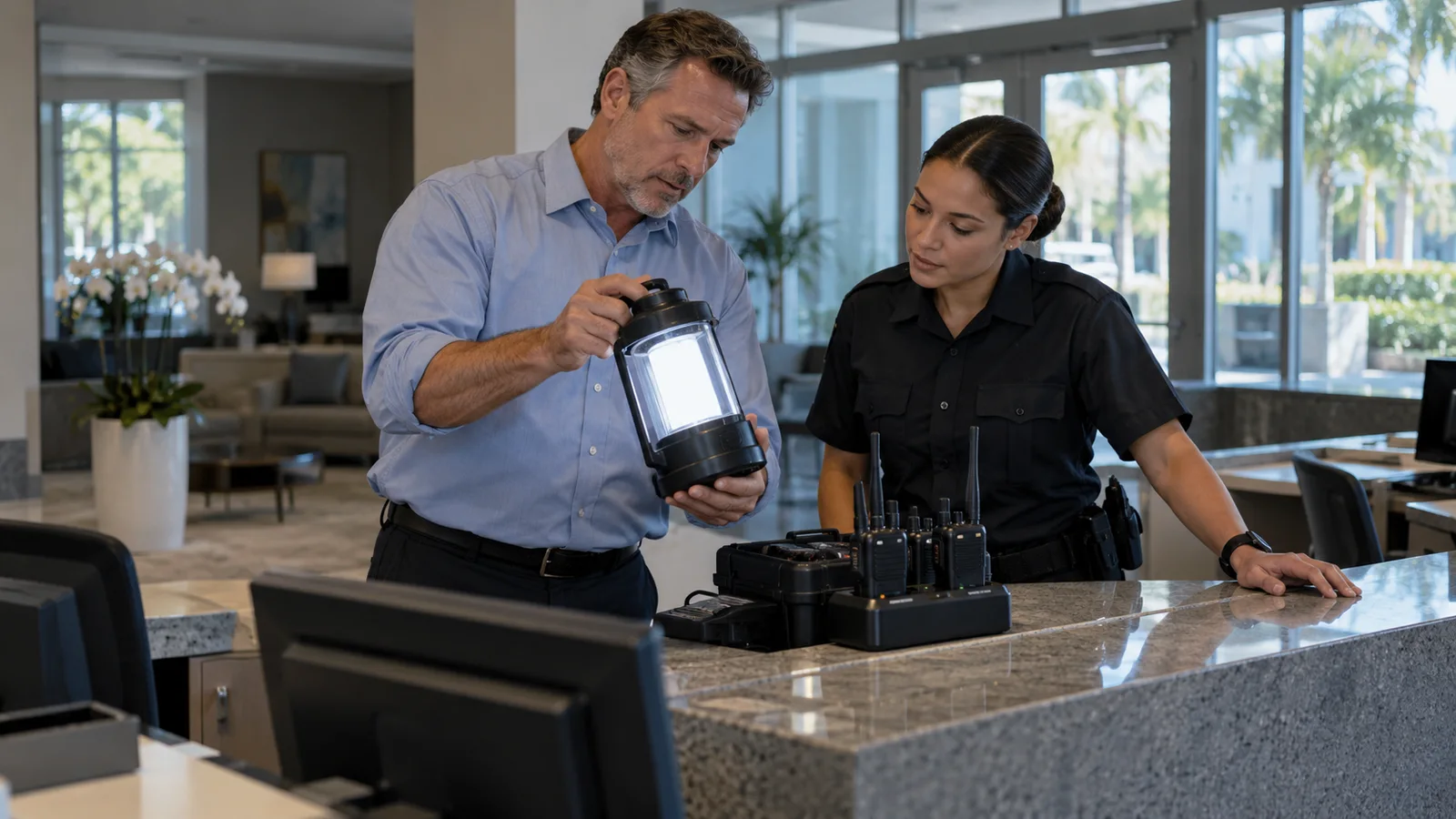
Identify the primary and alternate contacts for operations, facilities and emergency coordination. Maintain approved backup communication arrangements and check readiness during routine preparation. Ready.gov provides general power-outage preparedness information, including preparation for interrupted services.
Tell staff what is known, what remains uncertain and when the next update will come. Avoid repeated promises that power will return in a few minutes unless the information has a reliable source. Visitors and contractors need instructions too, especially if normal appointments are suspended.
Record the decision to continue or pause
The authorized manager should document whether operations continue, pause or close, including the relevant professional advice and approved interim measures. Different parts of a property may have different conditions, so communicate the scope clearly.
For example, restored reception lighting does not establish that every dependent system is functioning. Keep the status of each essential function with its responsible owner. Security can report observations and support controlled movement within its assignment.
Reopen through verification, not assumption
When electricity returns, qualified teams should confirm the relevant systems and operational conditions. Reconcile temporary access records, check outstanding visits and communicate the return to normal procedures.
Review the event while details are fresh: which contacts failed, what information was missing and which temporary arrangements caused confusion? Assign changes and test them during the next planned exercise. A useful outage plan becomes more precise after each review rather than growing into an unreadable emergency binder.
Quick review checklist
- Qualified owners for dependent systems
- Approved access contingency
- Current communication contacts
- Documented continue-or-pause decision
- Verified restoration and reconciled temporary records
Reference: Ready.gov: Power Outages.
Put the process into your site plan
Use this guide alongside our article on hurricane security planning for Miami businesses. To discuss the responsibilities, operating conditions and coverage your property or event needs, contact FSO Guard about the appropriate security scope.
Frequently asked questions
Do all electronic doors behave the same way in a power outage?
No. Obtain the approved site-specific procedure from qualified facilities and system professionals. Do not assume how a particular lock will respond.
Can reception continue using a paper visitor log?
Only under an approved contingency that protects information, preserves authorization and allows later reconciliation.
Who decides when normal operations resume?
The designated manager should coordinate verification with the relevant qualified teams and communicate the scope of reopening.