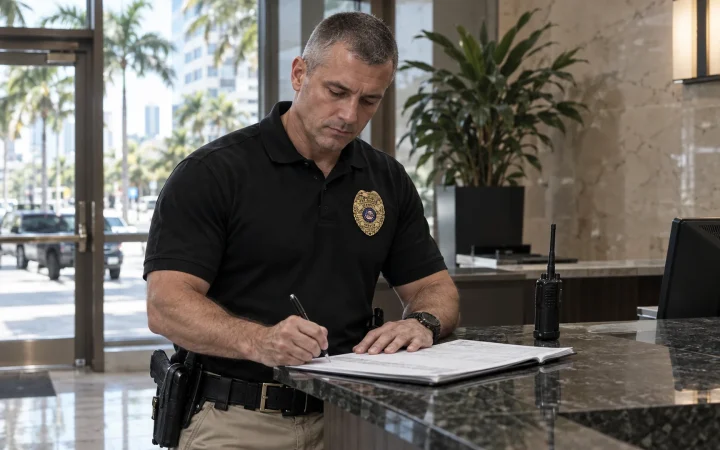

“Is Miami safe?” is a reasonable question, but a citywide yes or no will not plan your trip. A family arriving with luggage, a business traveler attending several meetings and a guest leaving a late-night event face different decisions. Start with your itinerary: where you will stay, how you will move between places and who will help if plans change. This guide offers a planning framework, not a crime ranking or a guarantee about any neighborhood.
Start with the arrival, not the sightseeing
Before departure, confirm the accommodation address, check-in procedure and a contact who can resolve a delayed arrival. Send the same destination to everyone in your party. Agree where to regroup if luggage, queues or phone problems separate you. Keep the booking reference available offline and avoid sharing your full itinerary publicly.
A useful arrival brief fits on one screen: destination, transport arrangement, accommodation contact and the person responsible for the group. For a multi-stop visit, travel security planning in Miami can help coordinate these handoffs.
Choose the hotel around the trip you will actually take
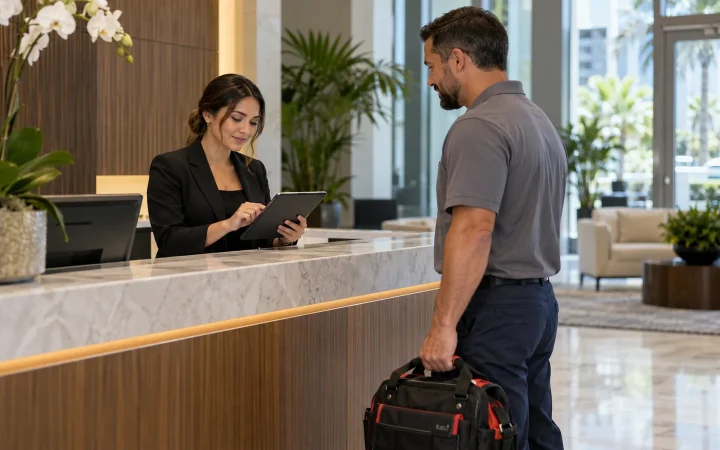
Look beyond photographs of the room. Ask about reception hours, the guest entrance, vehicle pickup arrangements and how visitors or deliveries reach your floor. A convenient address can still be inconvenient for a late arrival or a family moving with children. Verify practical details directly with the property instead of relying on an old review.
Miami and Miami Beach are different jurisdictions. Record the correct property address rather than just a neighborhood nickname. Before booking a private rental, read our rental verification checklist.
Keep beach and vehicle routines simple
Miami Beach Police advises visitors to keep valuables out of view in vehicles and avoid leaving belongings unattended on the beach. Decide who is responsible for bags before anyone enters the water. Carry only what you need for that outing and have a plan for returning to the hotel if your phone is lost.
The important question is not whether a bag looks expensive. It is whether losing it would also remove your identification, room access, money and only way to contact your group. Separate those points of failure where practical.
Plan the return before the evening begins
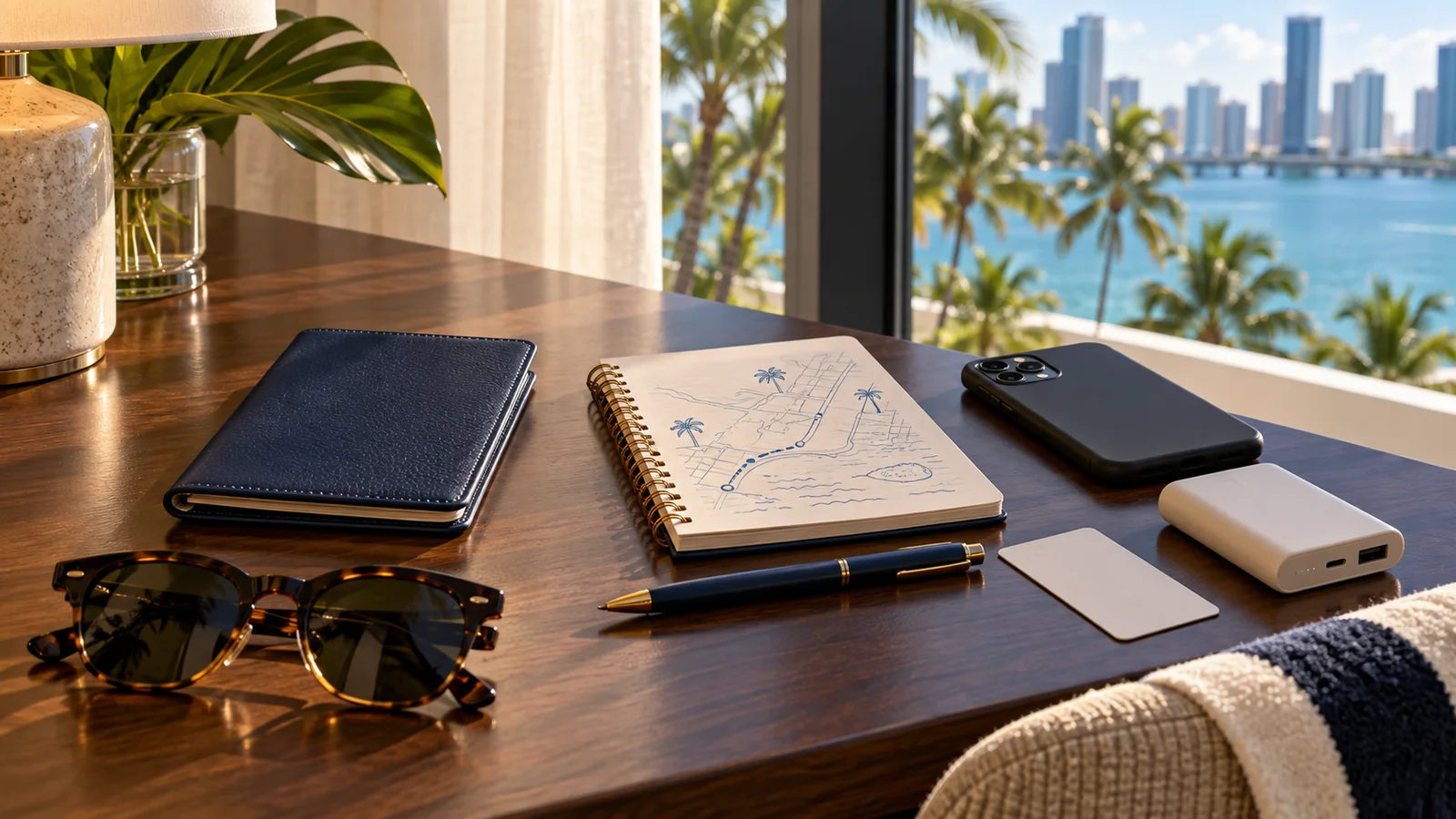
Choose a pickup location that your party and transport provider can identify easily. Confirm the vehicle and driver through the booked service. If the venue changes, update the group before leaving. A phone with a flat battery should not be the only reason nobody knows where to meet.
For Art Week, a wedding or a private reception, ask the host which entrance and meeting point to use. An invitation address may identify the building without explaining guest access. Our Art Week planning guide covers this coordination in more detail.
If something goes wrong, separate urgent help from follow-up
Call 911 for an emergency. For a lost item or a non-emergency incident, use the appropriate local reporting channel and keep relevant booking details, times and messages. Do not confront someone or follow them to recover property. A private security provider is not a substitute for emergency services.
When private protection is worth discussing
Consider additional support when the itinerary involves public visibility, a known concern, valuable items or several people and venues that need coordination. Describe the situation rather than ordering a generic number of guards. FSO Guard bodyguard services can be scoped around the people, schedule and circumstances. Coverage and pricing are agreed individually; ordinary tourism does not automatically require a bodyguard.
Plan your next step
Planning a visit with several destinations or a specific security concern? Request a tailored plan from FSO Guard.