
Keep visit approval with the school
School visitor management should give front-office staff a clear, repeatable process for adult appointments. The school determines who may visit, why, when and under what conditions. Reception and assigned security staff apply those instructions rather than making educational or custody decisions themselves.
CISA’s K–12 school security guide describes a layered approach to school security. A visitor process is one part of that wider system. This article addresses ordinary adult visits, not emergency procedures or detailed protective arrangements that should remain controlled.
Prepare the approved visit record
Identify the host, purpose, expected time and permitted destination. Include the school’s verification and escort requirements. Provide an alternate contact so a visit does not depend on one employee answering a phone.
Do not expose student schedules or personal information in a public appointment list. Keep the information needed by reception separate from sensitive educational or family records. An adult’s familiarity with the school does not remove the need to follow the current process.
Use the same arrival sequence consistently
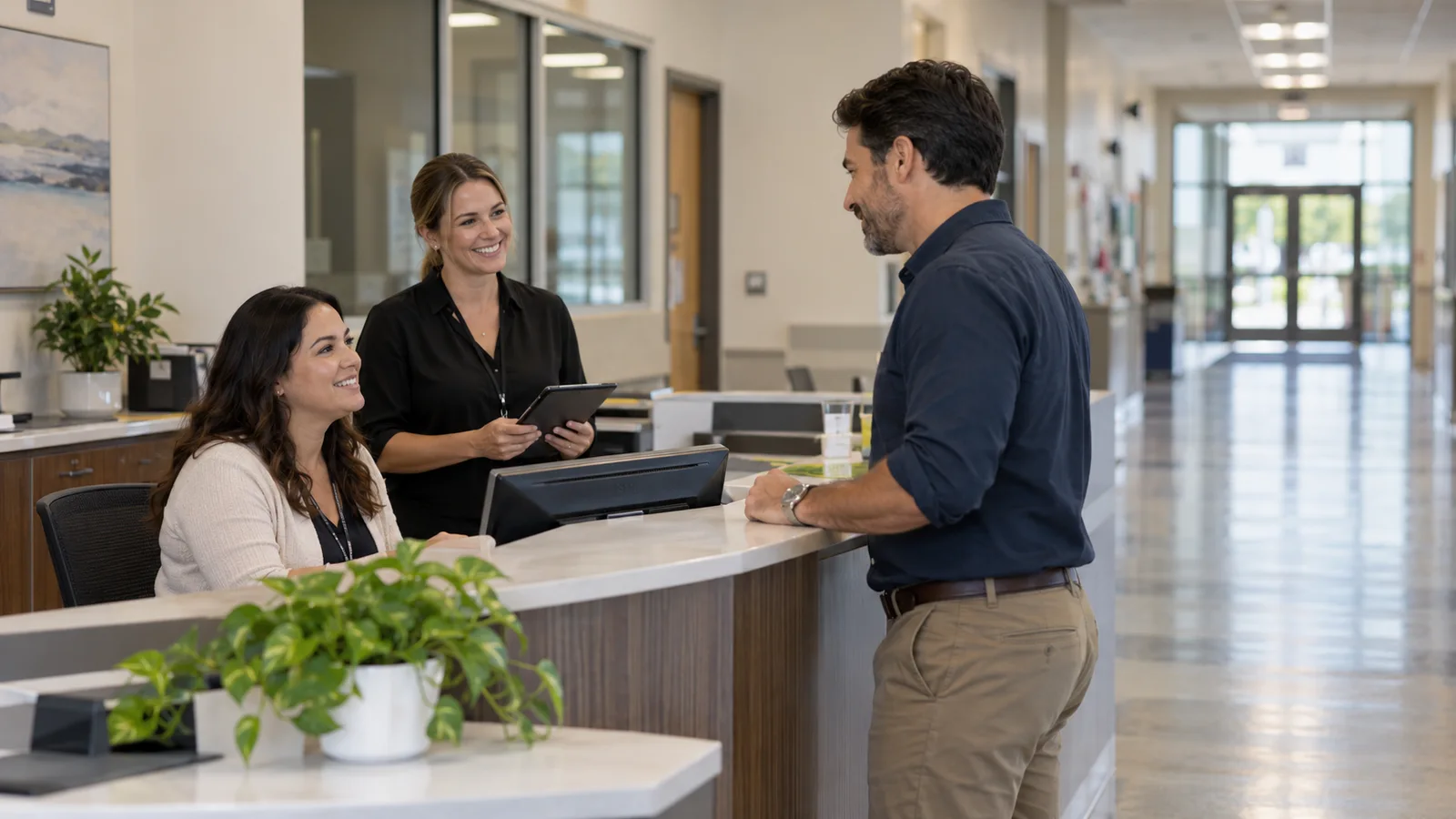
Welcome the visitor, establish the appointment through the approved system and complete the school’s verification steps. Confirm that the host is available and the visit remains authorized. Issue the appropriate temporary badge only after the required approval.
If details differ, keep the request with the designated school decision-maker. A changed visitor, additional adult or different destination should not be silently added to the original permission. Explain the next step calmly while preserving the school’s access boundary.
Make exceptions visible without public disclosure
Unscheduled meetings, forgotten identification or an unavailable host need written exception procedures. Front-office staff should know whom to contact and where the person may wait. Security may support a calm environment while the authorized school representative decides.
Family disagreements and student-release requests require the school’s specific policies and authorized personnel. Do not treat a visitor badge as permission to collect a child. Avoid discussing sensitive family details in a lobby or over an unrestricted radio channel.
Close visits and review the process
Record departure and reconcile temporary access items. Open visits at the end of the expected period should be reviewed through the approved contact route. Carry unresolved status into the next staff handover.
Review whether hosts provide accurate appointments, whether alternates respond and whether checkout records are completed. A useful improvement may be a clearer host responsibility rather than a more complicated form. Train substitutes and temporary front-office staff so the process remains consistent when regular employees are absent.
Quick review checklist
- School-approved appointment
- Host and alternate confirmed
- Verification and temporary permission
- Private exception handling
- Departure and returned access items
Reference: CISA: K–12 School Security Guide.
Put the process into your site plan
Use this guide alongside our article on Contractor Access Control. To discuss the responsibilities, operating conditions and coverage your property or event needs, contact FSO Guard about the appropriate security scope.
Frequently asked questions
Does a visitor badge authorize student pickup?
No. Student release must follow the school’s separate authorization process and be handled by the appropriate school personnel.
Who should decide an unscheduled visitor exception?
The designated school representative under the school’s policy. Reception or security should not invent an exception independently.
What should be reviewed after checkout?
Departure status, returned access items and any unresolved issue. Keep personal information limited and controlled.