
An executive protection travel brief turns a calendar into an assignment the team can plan. It explains the purpose of the trip, the expected movements, who can approve changes and where responsibilities pass between people. The most useful brief is current and controlled, not simply a long email chain.
For a Miami business visit, an assistant may coordinate flights, a hotel, meetings and several drivers. Each supplier can do their own job correctly while an important handoff remains unclear. Resolve those handoffs before the traveler arrives.
Start with the assignment, not the vehicle
Explain which parts of the visit require protection support and which are transportation or hospitality arrangements. A chauffeured vehicle and an executive protection assignment are different services. Confirm the duties, locations, working hours and qualifications needed for the scope.
Identify the client decision-maker and a backup. The executive, assistant and event host should know which changes require coordination with the protection lead. Avoid giving different providers conflicting instructions through separate private messages.
Prepare a concise initial brief
- Trip dates, general purpose and the areas where support is requested.
- Current itinerary with a version or last-updated time.
- Authorized client contact and backup for decisions.
- Confirmed transport providers and responsibility for each handoff.
- Venue and hotel contacts who may coordinate the agreed arrangements.
- Relevant accessibility, communication or service needs, shared appropriately.
- Known concerns requiring a private discussion with the protection lead.
- Rules for itinerary access, changes and distribution.
Do not place passport copies, detailed medical records or private family information in a general inquiry form. If particular information is needed for the assignment, agree on the appropriate recipient and channel. Sharing more material does not automatically improve planning.
Confirm the arrival handoff
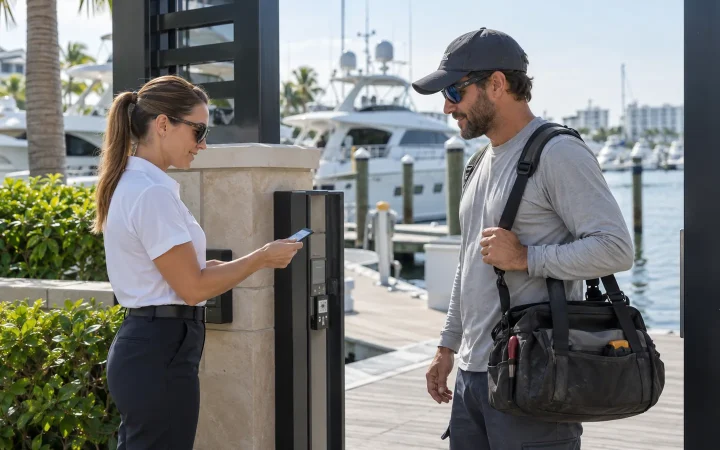
Agree how the traveler identifies the assigned contact, who monitors an arrival change and how the team communicates a delay. Use established contact details rather than treating an unexpected message from an unfamiliar number as a verified replacement instruction.
For each handoff, identify who is responsible before, during and after it. A driver who has delivered a passenger to a venue may not be the person coordinating the next movement. Keep the operational details in the restricted assignment brief rather than a public event schedule.
Give venues enough information to cooperate
Ask the venue’s authorized contact to confirm the arrangements relevant to the assignment, such as arrival coordination and the designated person for changes. Do not assume that a reservation automatically gives a private team permission to use staff-only areas or change venue procedures.
Clarify the boundary between venue security and the client’s team. A shared understanding of roles is more useful than two teams assuming the other controls a decision. For a broader gathering, connect the brief to the organizer’s event security plan.
Use one process for itinerary changes
A last-minute meeting is not just another calendar entry. The designated contact should notify the protection lead, confirm the revised arrangements and make sure affected providers receive the same version. Remove superseded instructions from active circulation.
A fictional example: a meeting moves from the hotel to a client’s office. The assistant confirms the new host, the transport lead receives the revised destination, and the protection lead reviews the changed assignment before the departure is treated as confirmed. No route or security arrangement needs to be broadcast to unrelated attendees.
Protect privacy before and after the visit
CISA’s Personal Security Considerations Action Guide offers broader personal-security planning resources. For a business trip, decide who needs access to movement information and avoid unnecessary real-time public location sharing.
At completion, close outstanding operational matters and handle itinerary records under the agreed retention process. Review missed handoffs or conflicting instructions with the responsible people. Keep the review factual and avoid turning it into publicity about a private client’s movements.
Request a defined protection scope
FSO Guard’s executive protection services can be discussed around this brief. Start with dates, location, the requested responsibilities and a client contact. For pricing factors, use the existing bodyguard cost guide; for hotel access procedures, see the hotel room-access checklist.
Frequently asked questions
Is a driver the same as an executive protection agent?
No. Transportation and protection are different scopes. Confirm the provider’s assigned duties, qualifications and responsibilities for the trip.
Should an assistant send every personal document in the first inquiry?
No. Start with general assignment requirements. Share sensitive information only when needed, with the appropriate recipient through an agreed channel.
Who should approve a last-minute itinerary change?
Use the designated client decision-maker and coordinate with the protection lead and affected providers before treating the revised arrangements as confirmed.