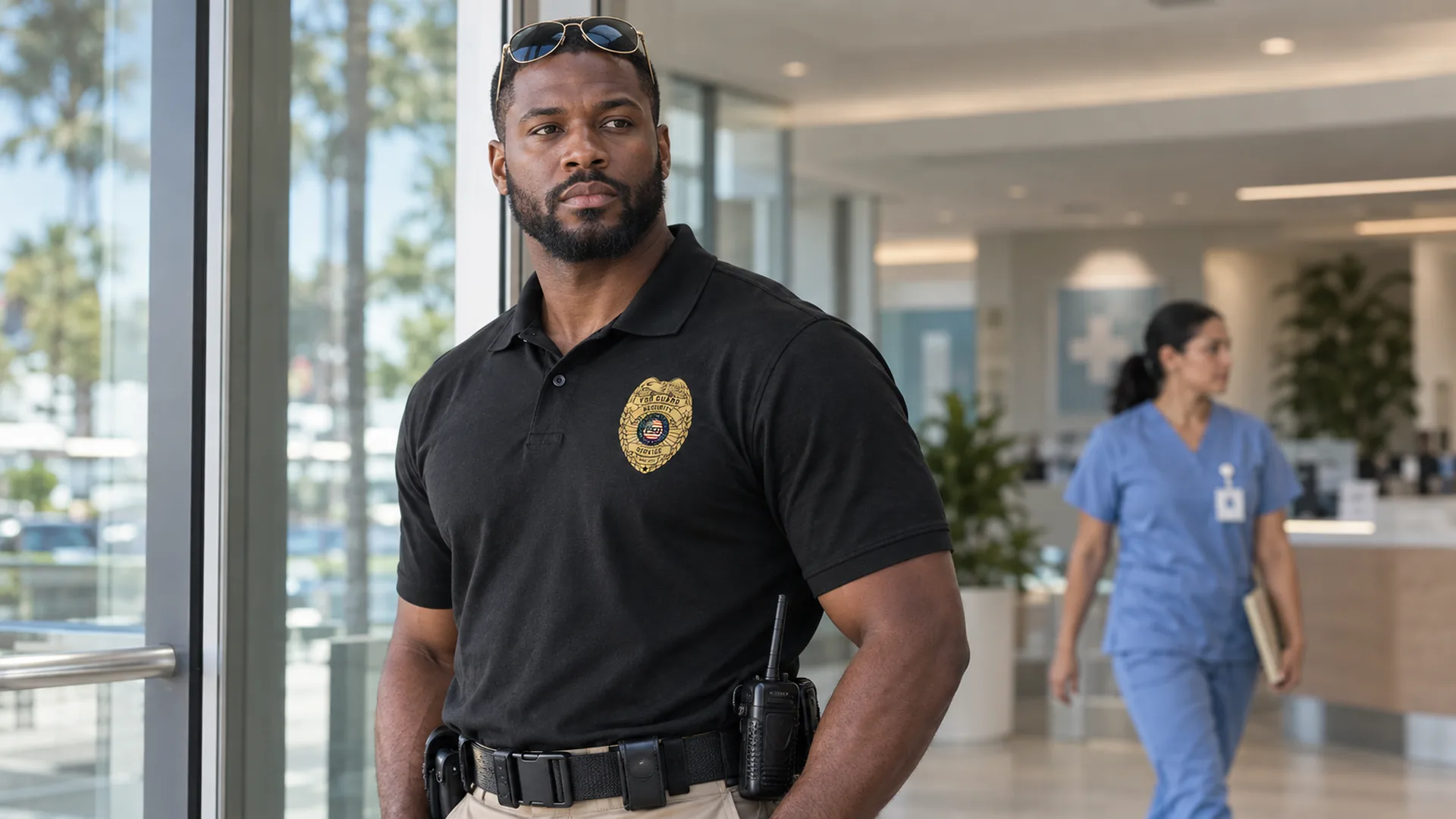
A healthcare security post must support care without disrupting it. Waiting rooms, staff entrances and parking areas each need clear duties. FSO Guard helps facilities plan access, respond calmly to conflict and document incidents for management review.
Our licensed hospital and healthcare security officers serve Miami and South Florida. They are trained for clinical settings and briefed on privacy rules. Coverage is available for hospitals, clinics, surgery centers, medical offices and behavioral health facilities.
Facilities we serve
- Hospitals and emergency departments: ER presence, lobby and visitor control, parking and campus patrols, overnight posts.
- Urgent care and walk-in clinics in strip centers and medical plazas across Miami-Dade and Broward.
- Surgery centers and plastic surgery clinics: Miami’s cosmetic surgery corridor, with recovery houses and out-of-town patients.
- Medical office buildings: lobby and concierge posts, tenant access control, after-hours coverage.
- Dialysis, oncology and infusion centers with long-stay patients and families.
- Behavioral health, detox and addiction treatment facilities where de-escalation is a daily task.
- Pharmacies, compounding and specialty pharmacies holding controlled substances.
- Dental, dermatology, fertility and med spa practices that have had incidents or hold high-value equipment and products.
- Senior living, rehab and skilled nursing facilities with visitor control and night coverage.
Healthcare security services
Waiting room and reception presence
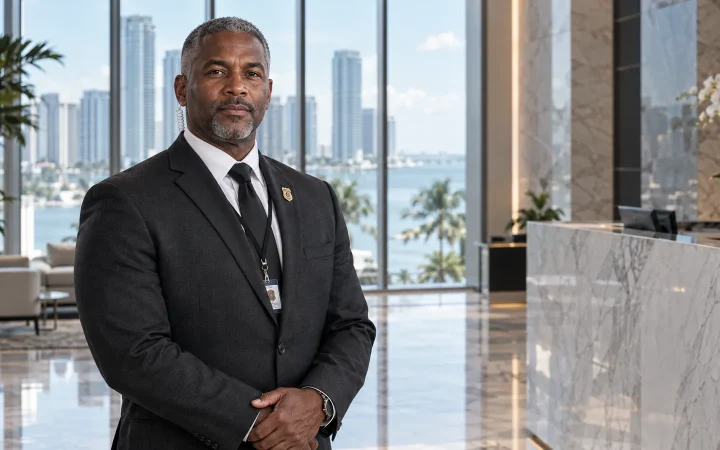
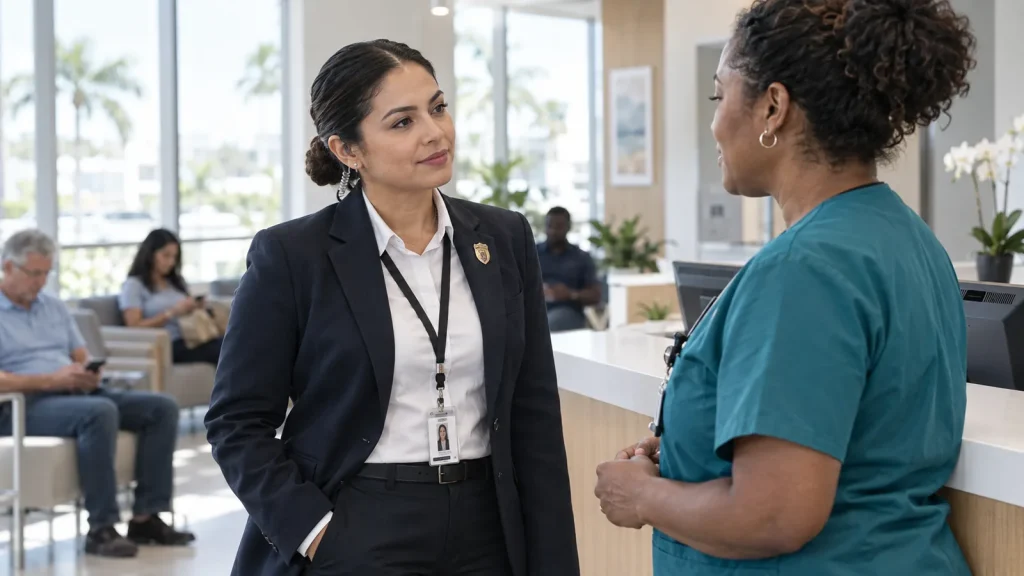
An entrance or waiting-room officer supports front-desk staff and watches for rising tension. The officer can help explain access rules and respond to disruptive behavior. Unarmed posts can use a uniform or blazer suited to the facility.
De-escalation and staff protection
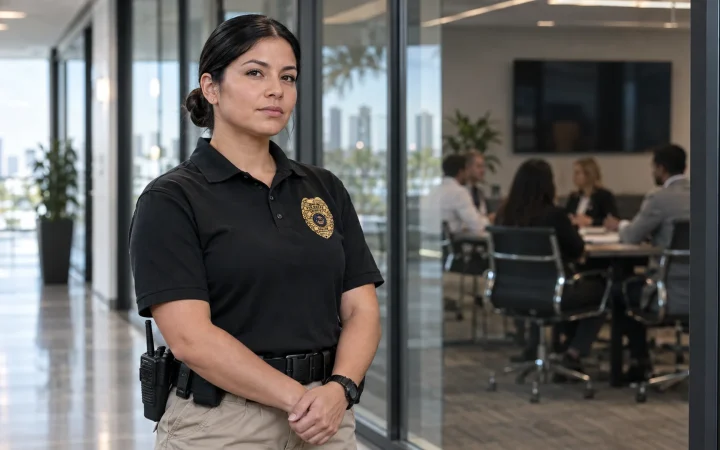
Officers use verbal de-escalation first. They answer staff calls and panic alerts and stand by during difficult conversations. Any physical response must be lawful and appropriate to the danger. Incidents are documented for the risk manager.
Access control and visitor management
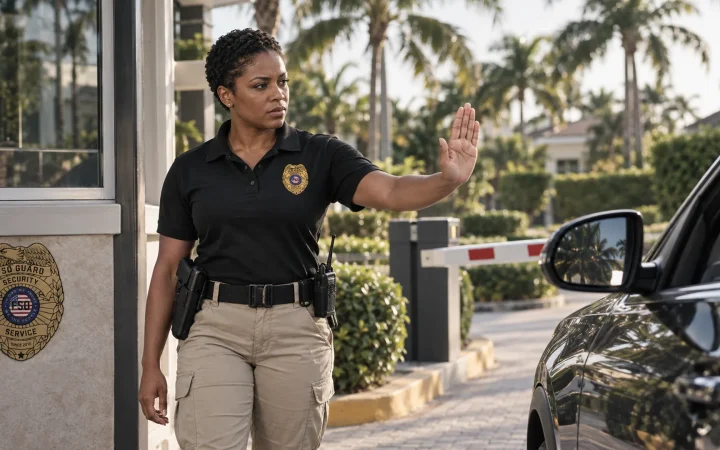
Access duties can include visitor badges, vendor checks and after-hours entry. Officers follow rules for clinical zones and visiting hours while treating patients courteously.
Emergency department and behavioral health support
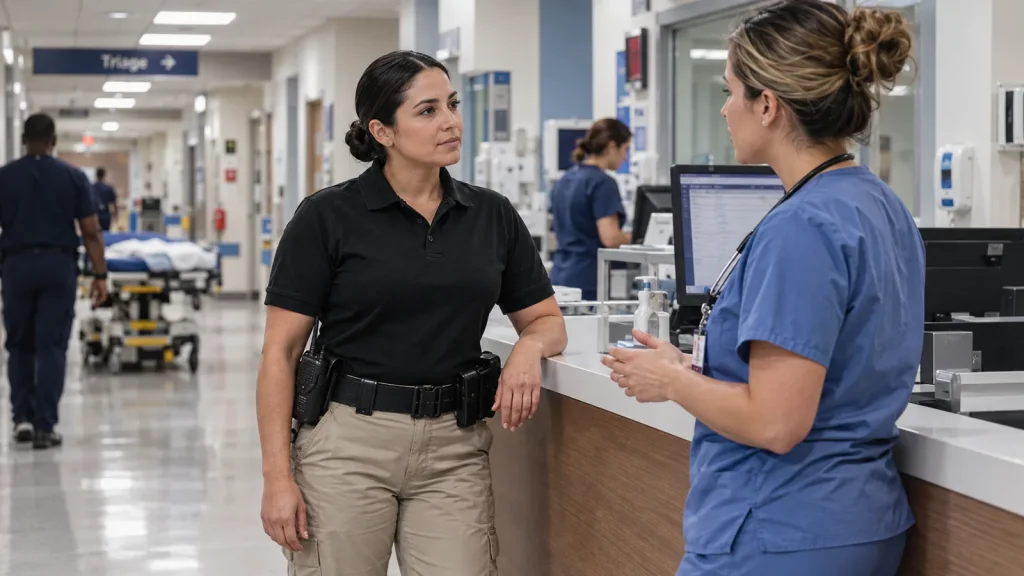
Emergency department posts support staff in lobbies, triage and ambulance areas. Clinical staff lead care decisions. Security duties and any patient-watch role follow the facility’s approved procedures.
Pharmacy, drug and equipment protection
Controlled areas need defined access rules. Coverage can include medication rooms, delivery escorts and after-hours checks around equipment and clinical spaces.
Parking and staff escorts
Parking patrols and staff escorts support late shifts. Officers also help keep ambulance routes and patient drop-off areas clear.
After-hours and overnight coverage
Overnight officers cover facilities that remain active at night. Closed clinics may use mobile patrol and alarm response instead of a fixed post.
VIP and high-profile patients
Private patients may need discreet coverage coordinated with the care team. Our executive protection unit can support treatment and recovery visits. Officers sign confidentiality agreements.
Fire watch
Fire watch officers can support an agreed watch plan during alarm or sprinkler outages. Rounds and records follow the requirements set for the site.
Workplace violence and termination support
Licensed investigators can assess a documented threat or internal concern. Related services include termination security and background checks.
How we set up healthcare security
- Survey the facility. Review entrances, waiting areas, staff exits and parking with administrators and clinical leads. Include past incidents, cameras and alert systems.
- Write clinical-site procedures. Define privacy conduct, visitor rules, response steps and police contacts. Clinical staff lead patient-care matters. Compliance and risk teams review the plan.
- Select and brief officers. Calm judgment and patience matter in a care setting. Officers learn facility policies before the first shift, and the client meets the team before launch.
- Supervise the launch. A supervisor works the initial shifts, then checks posts without a fixed schedule. Incidents are reviewed with the risk manager each month.
- Keep records. Daily reports, same-day incident reports and monthly summaries support the facility’s review process.
Why healthcare facilities choose FSO Guard
- Licensed and insured. Florida security agency license B3100530 (Class B) and private investigative agency license A 1000095 (Class A). Every officer holds a Class D license; armed officers hold Class G.
- Calm presence. Officers are chosen for patience and sound judgment around patients and families.
- Privacy awareness. Confidentiality agreements and site instructions set limits on handling information. Your compliance team reviews the post orders.
- Language support. English, Spanish and Russian help teams communicate with patients and staff.
- Investigations in-house. Threat assessments, drug diversion and internal theft investigated by licensed investigators of the same company, not a subcontractor.
- Coordinated coverage. A clinic network can use one contract and reporting approach, with duties adapted to each site. Explore contract security.
Healthcare security cost
Price depends on post hours, officer level and the number of areas covered. A clinic may need one lobby post. A hospital may need separate entrance, parking and overnight coverage.
After the survey, you receive a written hourly quote with no hidden fees. Agreements are month-to-month with a four-hour minimum per shift. Read what drives security guard cost in Miami for the main pricing factors.
Service area
We serve the Health District and Civic Center, plus Brickell, Coral Gables, Kendall, Doral, Hialeah, Aventura and Miami Beach. Coverage also includes Hollywood, Fort Lauderdale, Plantation, Boca Raton and West Palm Beach. Explore Florida security services or the full service area.
Call 888.881.8099, text us or send the form to arrange a confidential survey with your administrator. See commercial security and concierge security for medical office options.