Type “best security company in Miami” into Google and you will get lists written by the companies themselves. This page is different: it is a checklist for choosing a security company in Miami that you can apply to any provider — including us. Work through the ten points below and the right choice usually becomes obvious.
1. Verify the agency license (Class B)
Every security agency in Florida must hold a Class B license from the Department of Agriculture and Consumer Services. Ask for the number and look it up. No number, no contract. Private investigation work requires a separate Class A agency license; if you need investigations too, verify both.
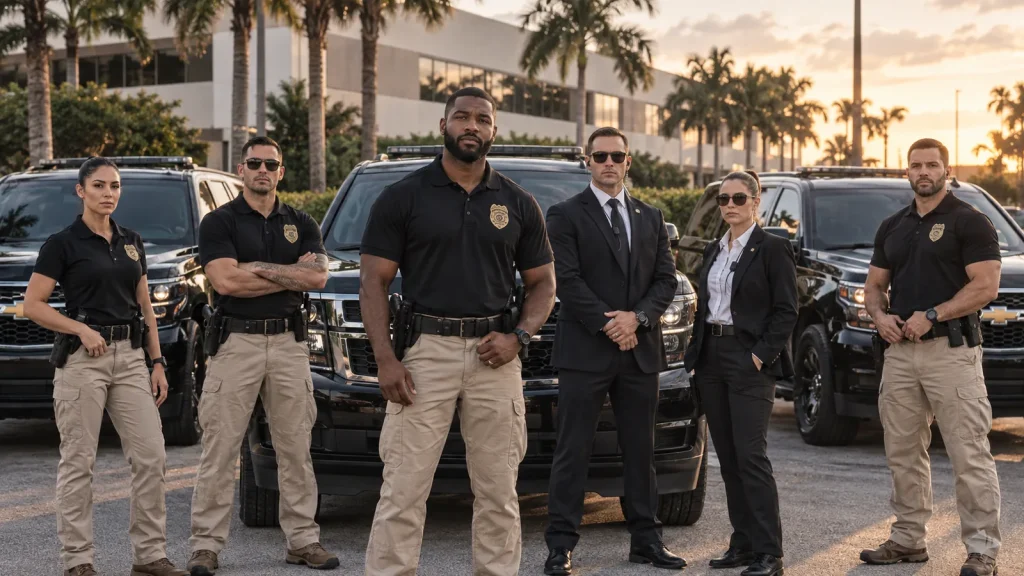
2. Verify officer licenses (Class D and Class G)
Every security officer must hold a Class D license; every armed officer must also hold a Class G firearms license and re-qualify regularly. Ask how the company checks licenses before assignment and whether you can see the license of the officer assigned to your site.
3. Ask for a certificate of insurance
Request a certificate of insurance naming you or your property as certificate holder before the first shift. It should show general liability and workers’ compensation. A company that hesitates is telling you something.
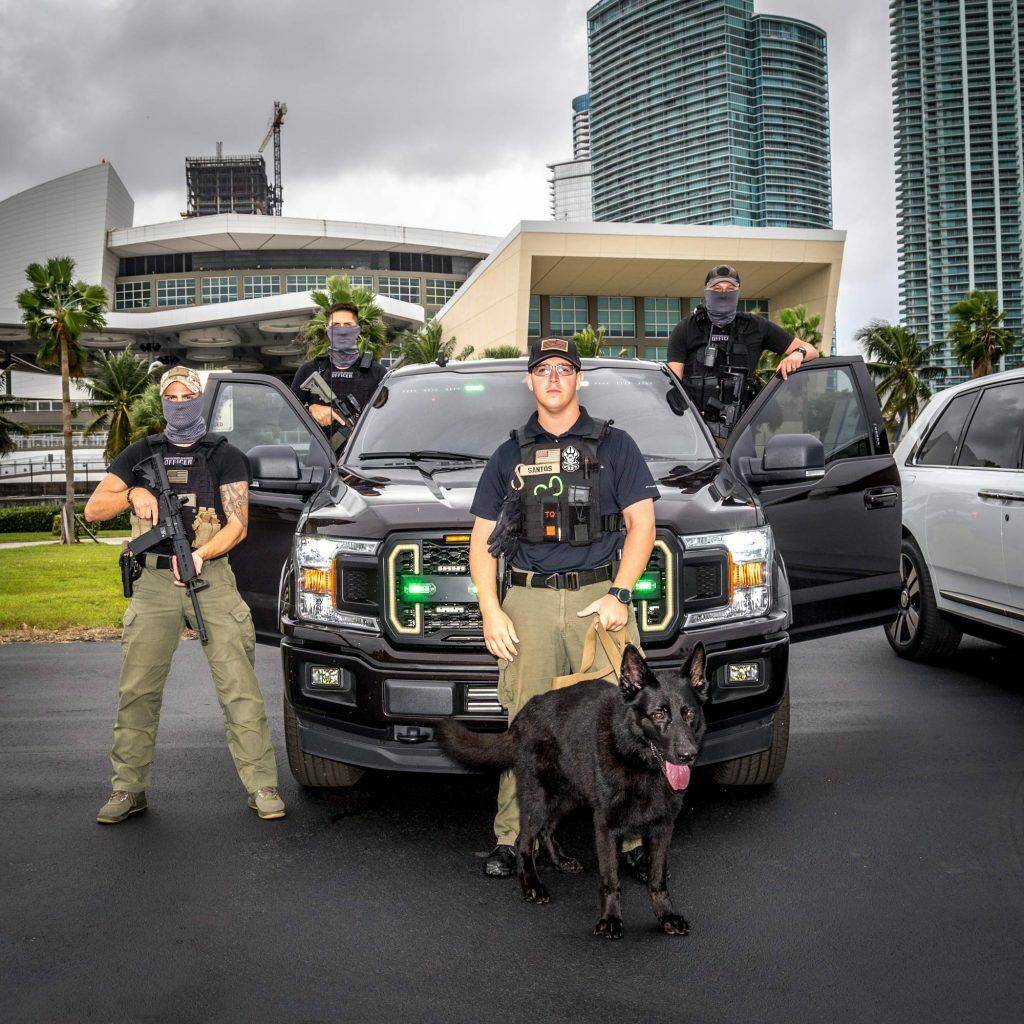
4. Ask who will actually be on your site
Are officers the agency’s own employees or subcontracted from another firm? How are they vetted — background check, drug screening, interview, training? Can you meet or see profiles of the officers before they start? For long-term posts, insist on a fixed roster rather than a rotating pool of strangers.
5. Ask how supervision works
The difference between a good and a bad security company is what happens when nobody is watching the officer. Ask: How often does a supervisor visit? How do you know an officer is at the post and awake? Who do I call at 3 a.m. and how fast do they answer? A serious company has field supervisors, check-in procedures and a 24/7 dispatch line.
6. Ask what happens when an officer does not show up
No-shows happen in every industry. What matters is the plan: how quickly is a replacement dispatched, who covers the gap, and are you credited for uncovered hours? Get it in writing.
7. Ask about post orders and reporting
Every post should have written post orders — what the officer does, when, and who to call. You should receive daily activity reports and immediate incident reports, with photos where relevant. If a company cannot show you a sample report, it probably does not produce them.
8. Understand the full price
Compare fully loaded hourly rates, not headline numbers: overtime and holiday multipliers, short-notice surcharges, supervisor and vehicle fees, cancellation terms, minimum shifts. Our guide to security guard costs in Miami explains what drives the rate. Be suspicious of a quote far below everyone else’s.
9. Read the contract
Fair contracts have a reasonable term, a clear termination clause, defined service levels (response times, replacement times, reporting) and no auto-renewal traps. Ask for a trial period on long-term posts — a confident company will agree.
10. Check fit, not just credentials
A company that mostly guards warehouses may not be the right fit for a luxury condo lobby, and a nightclub door team is not a substitute for executive protection. Ask for references from clients like you. Ask whether officers speak the languages your residents, staff or guests speak. Ask whether the company can grow with you — from a single officer to patrols, events and investigations — so you are not managing four vendors in a year.
Red flags: walk away if you see these
- No agency license number or an excuse for why it cannot be shared
- No insurance certificate, or “we will send it later”
- Cash-only pricing or rates far below the market
- Officers subcontracted from unnamed companies
- No written post orders, no sample reports
- No supervisor name or phone number
- Pressure to sign a long contract on the first call
- Guarantees no honest company can make (“nothing will ever happen”)
How FSO Guard measures up
We wrote this checklist because we are happy to be judged by it. FSO Guard is a licensed Florida security agency (Class B) headquartered in Hollywood, FL, with Class D and Class G licensed officers, the insurance the state requires, written post orders, daily and incident reporting, field supervision, 24/7 dispatch and officers who speak English, Spanish and Russian. Ask us the ten questions — and ask everyone else the same ones.
Ready to compare? See our security services, call (786) 659-5011 or send the form for a written proposal.