
Start with the work that must be covered
Mobile patrol security and static security describe different coverage arrangements. A mobile assignment generally involves visits to a property within an agreed scope. A static assignment places personnel at a designated site or post for an agreed period. Neither label alone explains the actual service.
List the tasks first: continuous reception, visitor authorization, scheduled observations, opening support or incident reporting. Then identify which tasks require uninterrupted on-site availability and which can be completed during a visit. This prevents price comparisons between fundamentally different responsibilities.
Understand what happens between visits
For mobile coverage, ask who receives urgent calls, what response commitments actually apply and what happens when personnel are not on site. Do not assume that a patrol visit creates continuous monitoring or immediate emergency response.
Define the approved observations, reporting method, exception handling and follow-up responsibilities. Keep detailed timing and routes controlled. Management needs enough evidence to assess delivery without publishing operational patterns.
Examine the limits of a static post
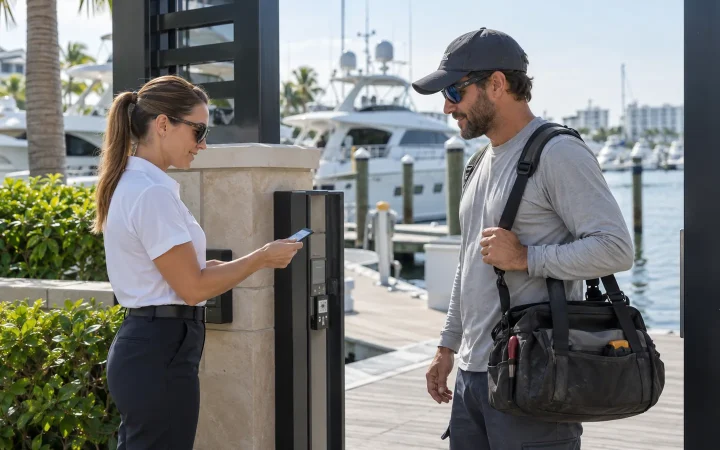
An officer assigned to reception may be unable to leave that post for a distant inspection without losing entrance coverage. A static arrangement therefore still requires a realistic task list, relief plan and escalation route.
Ask whether duties overlap in ways one person cannot perform simultaneously. Coverage hours, breaks, replacement arrangements and supervisor support should be explicit. Continuous presence at one location does not automatically mean every area is continuously observed.
Compare proposals using the same assumptions
Give bidders a common description of the property, tasks, coverage periods and reporting requirements. Ask them to identify exclusions and dependencies. Compare supervision, continuity arrangements and the handling of additional work alongside the quoted price.
A hybrid model may fit some properties: a staffed post for defined operations and separate visits for other agreed tasks. Treat that as a scoped service design, not a promise that combining labels removes every gap.
Review evidence after the service begins
Check whether the assigned tasks were completed, exceptions reached the right person and corrective actions closed. Review recurring access questions or unserved requests that suggest the scope needs adjustment.
For a Miami property manager, the most useful question is not which model sounds more protective. It is whether the arrangement provides the required decision-making and presence at the times the property needs them. Document those requirements before selecting or changing coverage.
Quick review checklist
- Tasks requiring continuous presence
- Tasks suited to defined visits
- Support between visits clarified
- Relief and competing duties addressed
- Delivery evidence and scope review agreed
Put the process into your site plan
Use this guide alongside our article on security guard pricing in Miami. To discuss the responsibilities, operating conditions and coverage your property or event needs, contact FSO Guard about the appropriate security scope.
Frequently asked questions
Does mobile patrol mean someone is always on site?
No. Clarify the agreed visits and what support applies between them. Do not assume continuous presence or immediate response.
Can a static officer perform every property task?
Only if the duties are realistically compatible with the assigned post. Leaving reception for another task may create a coverage conflict.
When is a hybrid arrangement useful?
When different tasks have different presence requirements and the combined scope clearly defines responsibilities, limits and handovers.