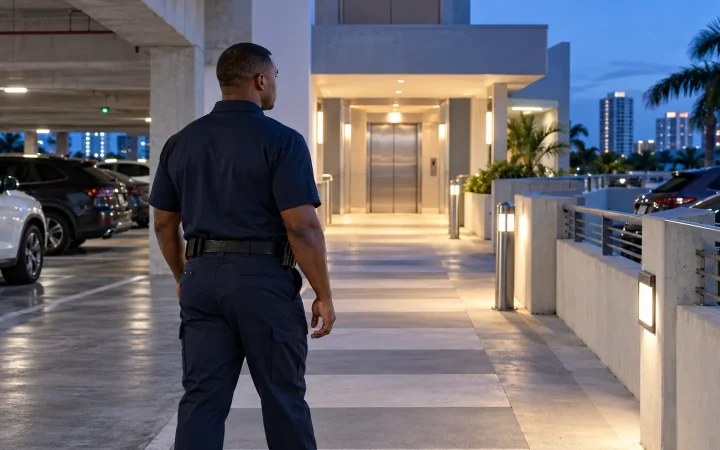
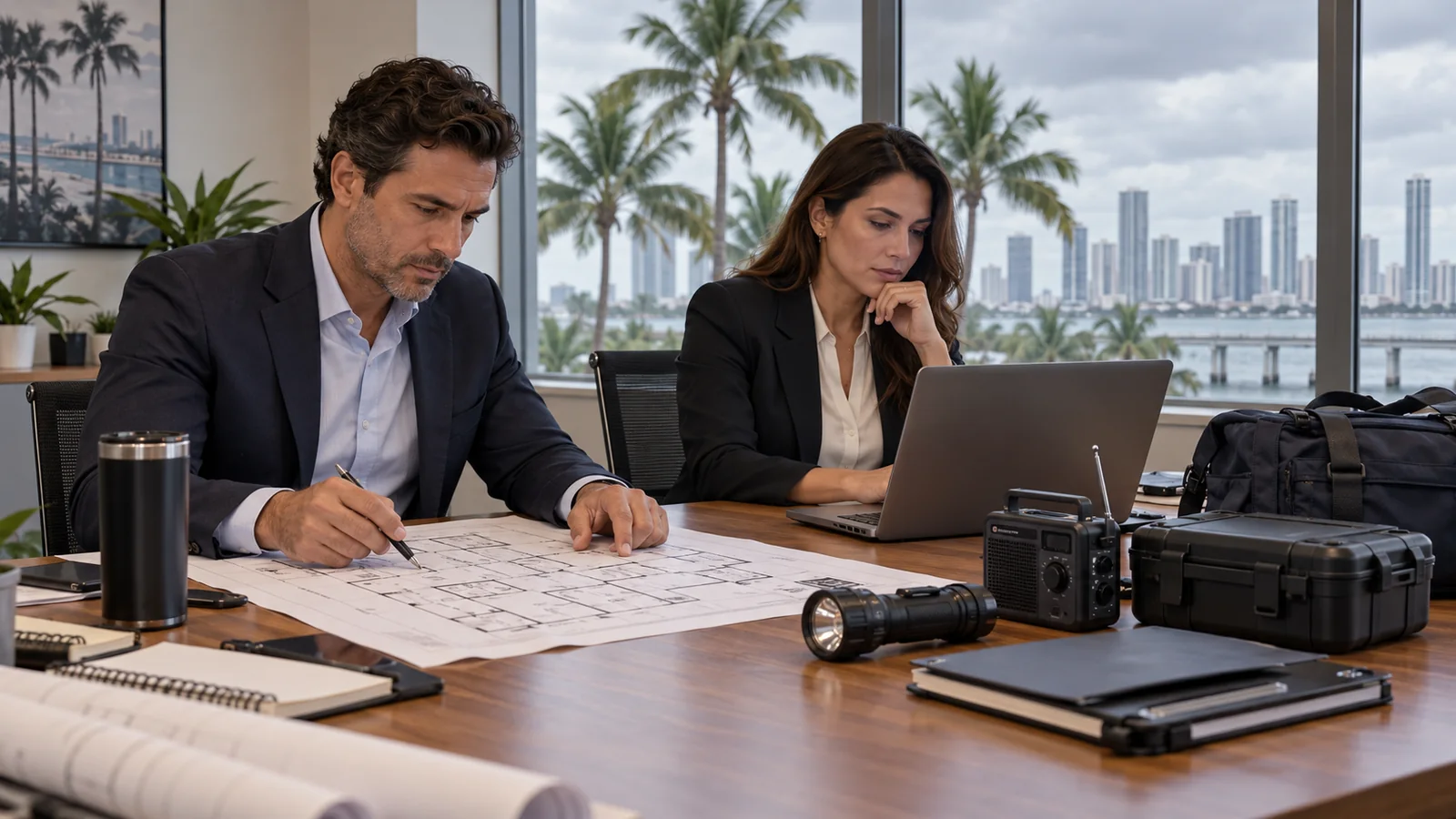
Hurricane preparedness for businesses is partly a facilities task and partly a decision-making task. A building may have shutters and backed-up files while staff still disagree about who can close it or admit a contractor afterward. This guide focuses on security coordination for Miami businesses and property managers. It complements official emergency instructions; it does not replace evacuation orders, professional inspections or your property-specific emergency plan.
Give every critical decision an owner
Build a short responsibility table covering staff communication, closure, records, site access and reopening. Name a primary decision-maker and a backup for each function. Keep a version available if normal workplace systems are unavailable.
A useful plan distinguishes authority from execution. The person who sends a closure message may not be the person authorized to make that decision. Confirm both roles and the channel used to announce changes.
Set closure and evacuation procedures in advance
Follow current county and municipal emergency information and evacuation instructions. Agree how official alerts trigger your internal process and who checks that the message reached the team. Allow employees to address their own household needs.
Do not plan to keep a guard or caretaker at an unsafe site to protect property. Define when personnel withdraw and how the property is handed over before conditions deteriorate. Any later attendance depends on official access rules and safe conditions.
Document the site before closing
Miami-Dade’s business guidance recommends backing up critical data, documenting inventory and maintaining employee communication arrangements. Add an operational closing record: which areas were secured, which vendors were canceled and which issues were already present.
Keep documents and contact details accessible to authorized decision-makers without placing them in an unrestricted shared folder. Record the location of essential information; do not include alarm codes in a widely distributed checklist.

Separate physical securing from security coverage
Building protection, electrical work, structural assessment and the securing of construction materials belong to qualified responsible parties. An officer should not be assumed to certify that a structure is safe or perform technical work outside the assignment.
For a construction property, coordinate the contractor’s preparation plan with site security responsibilities. For an occupied business, clarify how deliveries, visitors and staff departures are handled during shutdown.
Plan access after the storm
Before admitting people, confirm applicable official restrictions and obtain the necessary assessment from the responsible professionals. Keep a list of authorized staff and approved vendors, a check-in process and an escalation contact. A uniform or familiar vehicle is not sufficient authorization to enter.
Record who enters, why and which areas they may access. Do not route staff through floodwater, damaged structures or electrical hazards to recover property. Security personnel are not a substitute for emergency responders or technical inspectors.
Reopen in stages and keep a decision record
Decide who may approve reopening, how staff receive the instruction and which areas remain restricted. Log exceptions rather than relying on verbal handovers between shifts. Review what failed in the communications or access process while the details are still fresh.
A security risk assessment can help define responsibilities and gaps before the next event. Business security coverage should be scoped around approved conditions and availability, not a promise to operate through every storm.
Plan your next step
Preparing a business or managed property for storm season? Request a review of security responsibilities and access arrangements. Scope and pricing are agreed individually.