A holiday retail security checklist should help a store keep people moving, protect staff and handle exceptions without confusion. Adding a guard on the morning of a promotion will not solve an unclear entrance plan, an overloaded returns desk or a delivery arriving through the customer queue.
For a Miami boutique, shopping-center tenant or larger retail location, begin with the actual changes expected during the season: longer hours, temporary staff, special promotions, deliveries and more customers unfamiliar with the property. Build the plan around these changes rather than a generic assumption that every busy store needs the same number of officers.
Map the customer journey and the staff workload
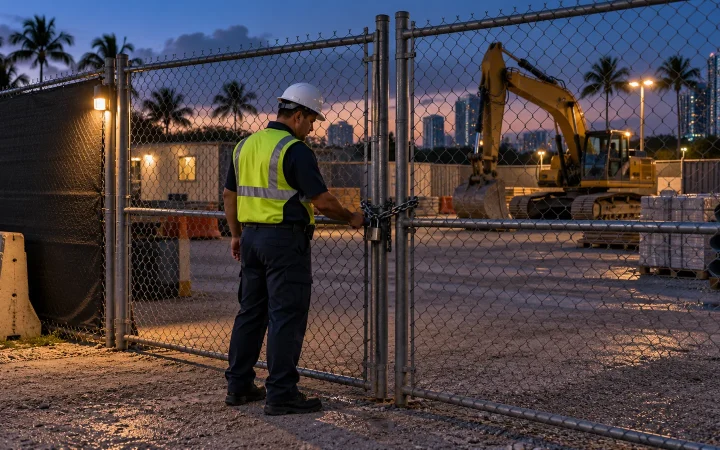
Walk from parking or the sidewalk through the entrance, shopping area, checkout and exit. Identify where customers pause, ask questions, collect purchases or wait for returns. Then review staff entry, deliveries and waste removal. A small service entrance can become an unplanned customer entrance if its purpose is not clear.
Ask the shopping-center or building manager which areas your store controls. Confirm responsibility for shared sidewalks, parking, common-area cameras and emergency communications. Tenant security and common-area security should have an agreed contact method and clear responsibilities.
Complete the pre-season checklist
- People: name the store decision-maker, security supervisor, relief contact and person responsible for communicating with property management.
- Hours: include opening preparation, late closing and staff departure, not just the hours customers can shop.
- Promotions: communicate availability and entry arrangements clearly so front-line staff do not have to improvise promises.
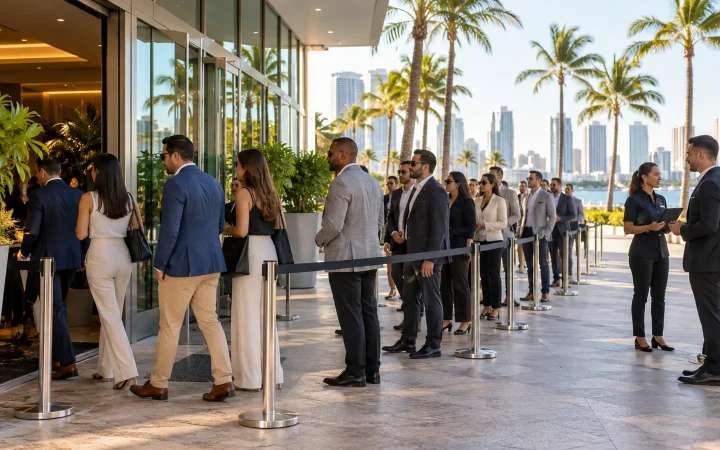
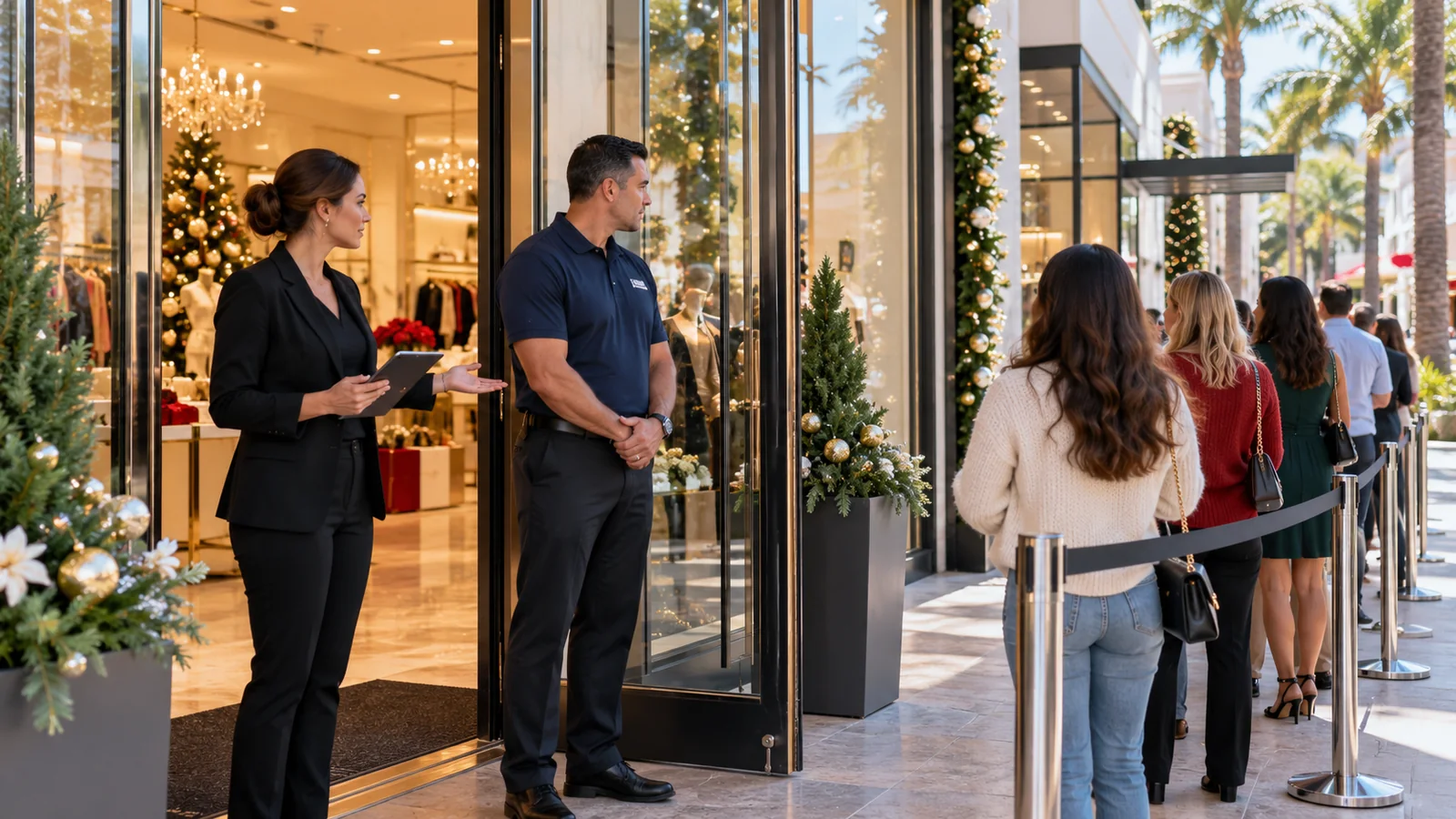
- Queues: agree on a layout that keeps exits, accessible routes and neighboring entrances usable.
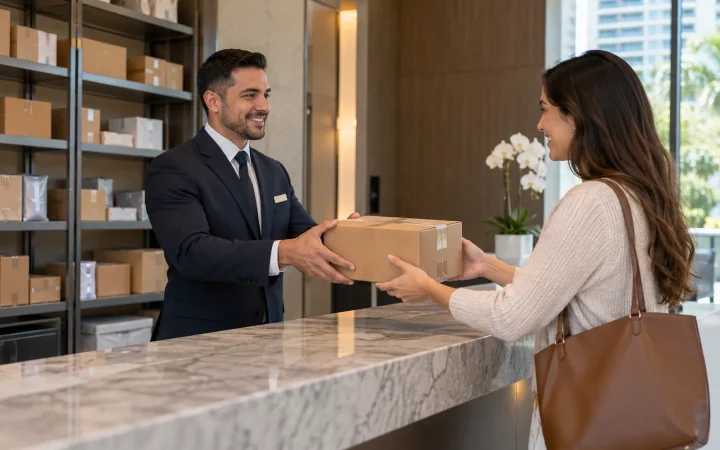
- Deliveries: identify the receiving contact and how unexpected arrivals will be verified without leaving the sales floor unmanaged.
- Temporary employees: provide role-specific access and a short briefing on reporting concerns, requesting help and following emergency instructions.
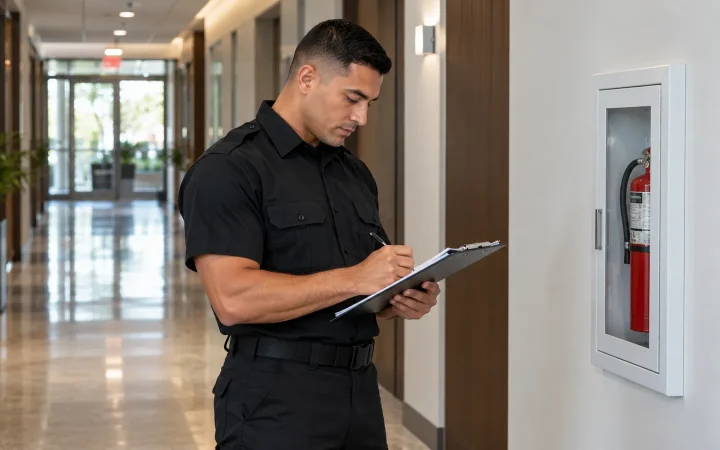
- Systems: report faults in approved cameras, radios, alarms or access equipment before the busy period.
- Exceptions: define who handles disputed returns, disruptive conduct, missing property and an urgent safety concern.
Plan busy entrances without restricting exits
OSHA’s Crowd Management Safety Guidelines for Retailers recommend advance planning, worker training, communication and keeping exits clear. Use the guidance with the venue’s approved occupancy and emergency arrangements. Do not invent an occupancy limit or use a merchandise display to control a crowd.
Give the entrance team an easy way to contact the manager. Explain who can pause admission, how customers receive updates and how people needing an accessible route will be assisted. Agree on these responsibilities before a line forms. A queue plan should work during ordinary trading as well as a short promotional surge.
Separate customer service from security decisions
A customer upset about a refund needs a consistent store policy and an authorized manager. Security should not be asked to decide pricing, approve returns or improvise a ban. Brief both teams on the point at which a routine disagreement becomes a safety concern.
Use calm communication, preserve personal space and follow approved escalation instructions. Do not encourage staff to chase a suspected shoplifter or enter a physical confrontation to recover merchandise. Observation, documentation and contacting the appropriate assistance should match training, company policy and applicable law. A general checklist is not a detention or use-of-force procedure.
Keep delivery and inventory exceptions visible
When a shipment arrives late, assign a receiving employee rather than relying on whoever happens to be near the door. Record discrepancies through the store’s inventory process. A security officer can support access control or document an observation without taking over stock reconciliation.
For example, if several temporary employees report that a receiving door is being left open during restocking, management can revise the restocking process and assign responsibility for the door. This is an illustrative management example, not evidence of theft or a report from an FSO client.
Include closing and the first review
Account for remaining staff and authorized contractors, complete the store’s closing checks and confirm who receives an unresolved issue. Plan how employees request assistance for departure when that service is part of the agreed security scope. Keep cash-handling times, routes and access credentials in restricted instructions, not the public-facing checklist.
After the first busy day, review a few useful observations: queue problems, unanswered calls, recurring disputes and equipment faults. Adjust the plan while the experience is fresh. A report is useful only if somebody owns the follow-up; see our guide to reviewing security reports.
Request the right seasonal coverage
Before requesting a proposal, prepare the store address, trading and staff hours, promotion dates, property-management contact and the tasks you want covered. For a separate launch party or ticketed event, use the broader event security planning guide. For ordinary seasonal retail coverage, contact FSO Guard with the store’s requirements and ask for responsibilities to be written into the assignment.