A construction site security checklist should show what was checked, what remains unresolved and who owns the next action. A signature beside “site secure” is not enough when subcontractors finish at different times, deliveries change and temporary access points move. Use the process below for a Miami construction project, adapting it to the superintendent’s safety plan and the actual scope of the security assignment.
Assign one person to accept the closing handoff
Before the last crew leaves, identify the closing lead, the security contact and a backup decision-maker. Separate responsibilities: a guard can report an open container, but should not be expected to operate machinery, handle electrical systems or certify that a work area is safe.
Record changes since the previous shift: moved fencing, a new material delivery, a camera obstruction or a subcontractor staying late. Provide updated instructions through an approved channel; do not leave gate codes or keys in a public-facing log.
Use this end-of-day construction site security checklist
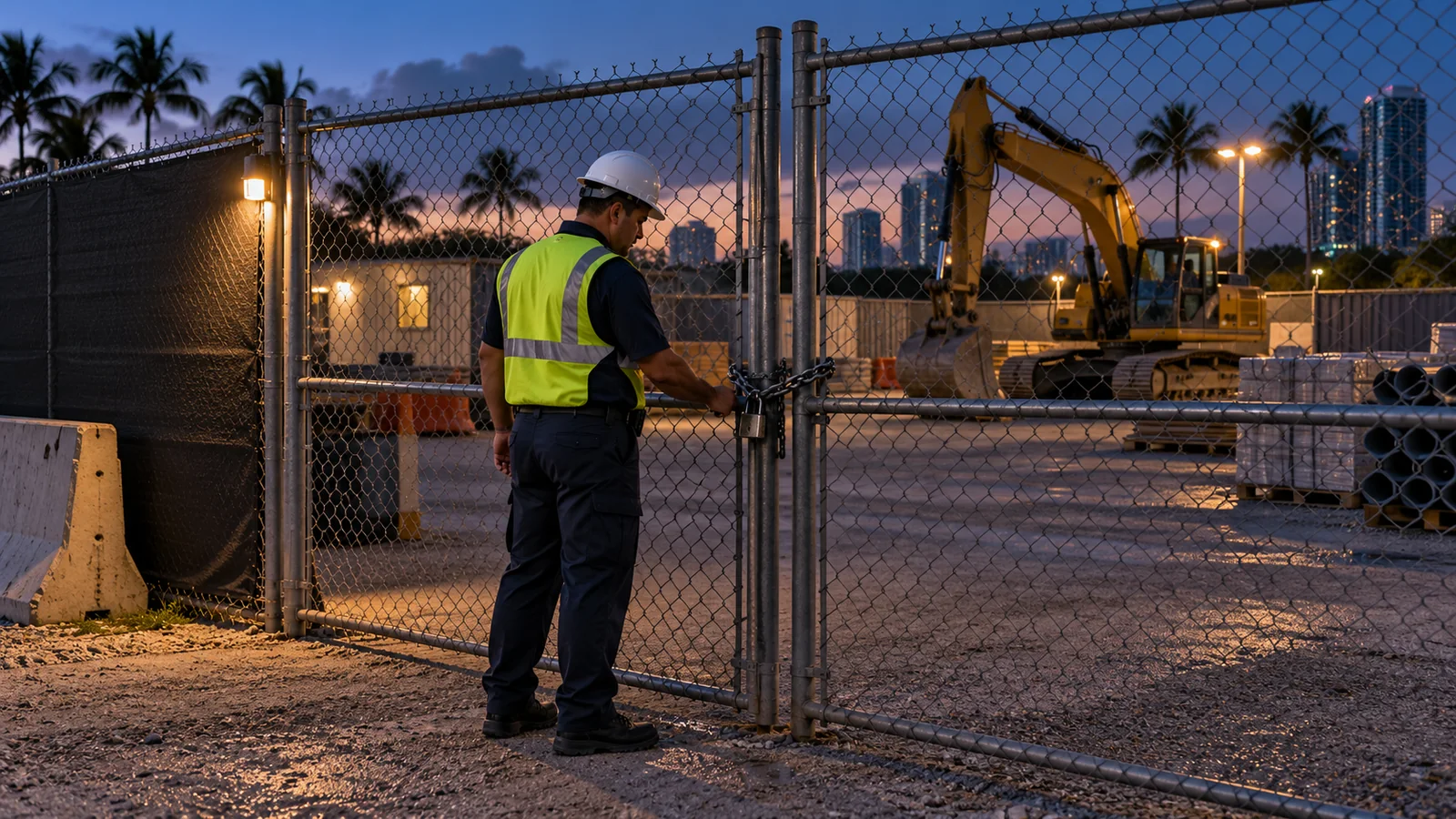
- Access points: account for designated gates, temporary openings and contractor entrances; document anything that cannot be secured.
- Personnel and deliveries: confirm which authorized workers remain and whether a late delivery is actually expected.
- Equipment and materials: reconcile high-value items against the current inventory and note authorized removals.
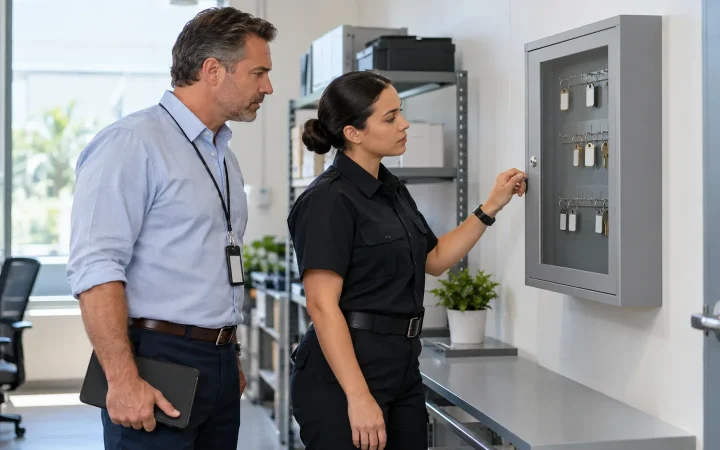
- Keys and credentials: follow the site’s checkout procedure; flag missing keys or access credentials to the responsible manager.
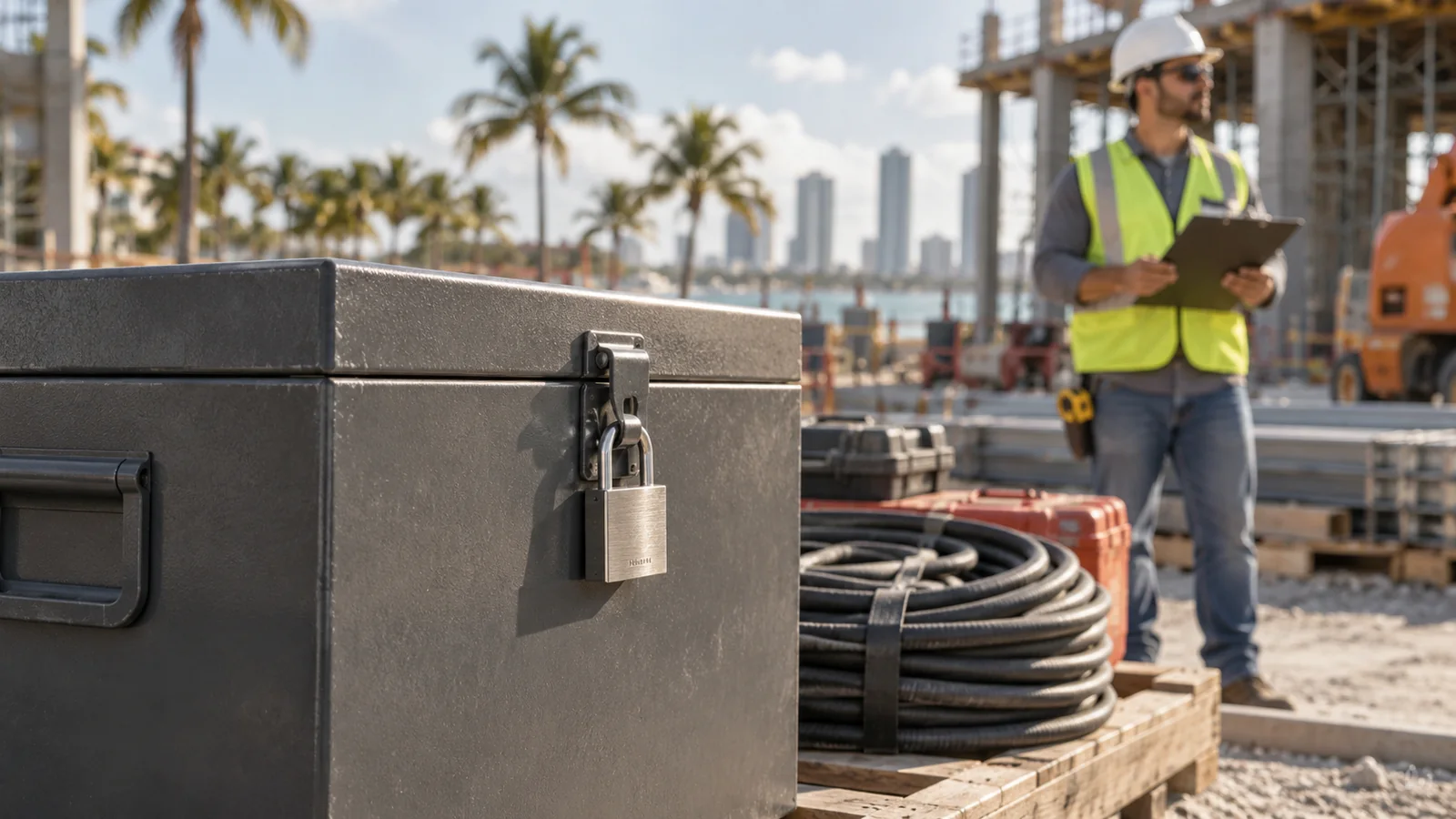
- Storage: confirm designated tool and material storage is closed according to site instructions, without entering unsafe areas.
- Visibility and systems: report damaged lighting, blocked camera views or known alarm faults to the assigned contact.
- Emergency access: keep approved access routes available; security lockup must not create an obstruction.
- Exceptions: record the problem, temporary measure, notified person and next review time.
Make equipment records useful before something goes missing
Keep a controlled inventory with the owner, make, model, identifying number, current location and recent photographs. Record rentals and subcontractor equipment separately so the person reviewing a discrepancy knows whom to contact. A delivery receipt alone may not identify a particular machine.
The National Insurance Crime Bureau’s guidance on equipment identification shows why identifying numbers matter when equipment must be traced. Store the inventory somewhere authorized managers can reach even if the site office is inaccessible. Do not publish serial numbers or storage locations in a public report.
Plan weekend exceptions before Friday’s handoff
Give the person controlling entry an approved list of expected work, delivery windows and an escalation contact. A company logo on a truck is not an access authorization. If an arrival is not on the list, use the agreed verification process rather than inventing an exception at the gate.
For Miami projects, include known weather-related access changes in the handoff. Security personnel should report unsafe conditions and follow the project’s emergency instructions, not enter hazardous areas to finish a checklist. After a layout change or weather disruption, review the route and assigned checks before the next shift.
Write exceptions so the next shift can act
A useful entry connects an observation to a decision. For example: “18:10 — delivery gate latch did not engage during the closing check. Superintendent notified at 18:14. Temporary access arrangement approved; maintenance follow-up assigned for the morning.” This is a sample format, not an account of a client incident.
Avoid “everything normal” when an area was inaccessible. State the limitation and who was told. Record completion only when the agreed check was actually performed. Keep detailed vulnerabilities and supporting photographs in the restricted report rather than a widely circulated email.
Review the site before the next crew starts
The opening lead should compare the overnight report with the closing record, reconcile authorized movements and assign unresolved items. Repeated exceptions deserve a change in process: a recurring access problem should not disappear into another signed checklist.
If the site needs a defined after-hours presence, review our construction site security services in Miami. Share the location, project phase, working hours and access constraints so the proposed coverage can be built around the assignment.
Further reading: NICB equipment identification