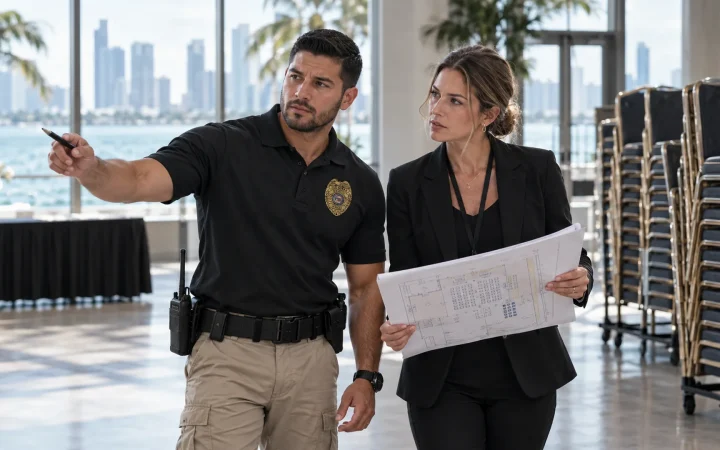
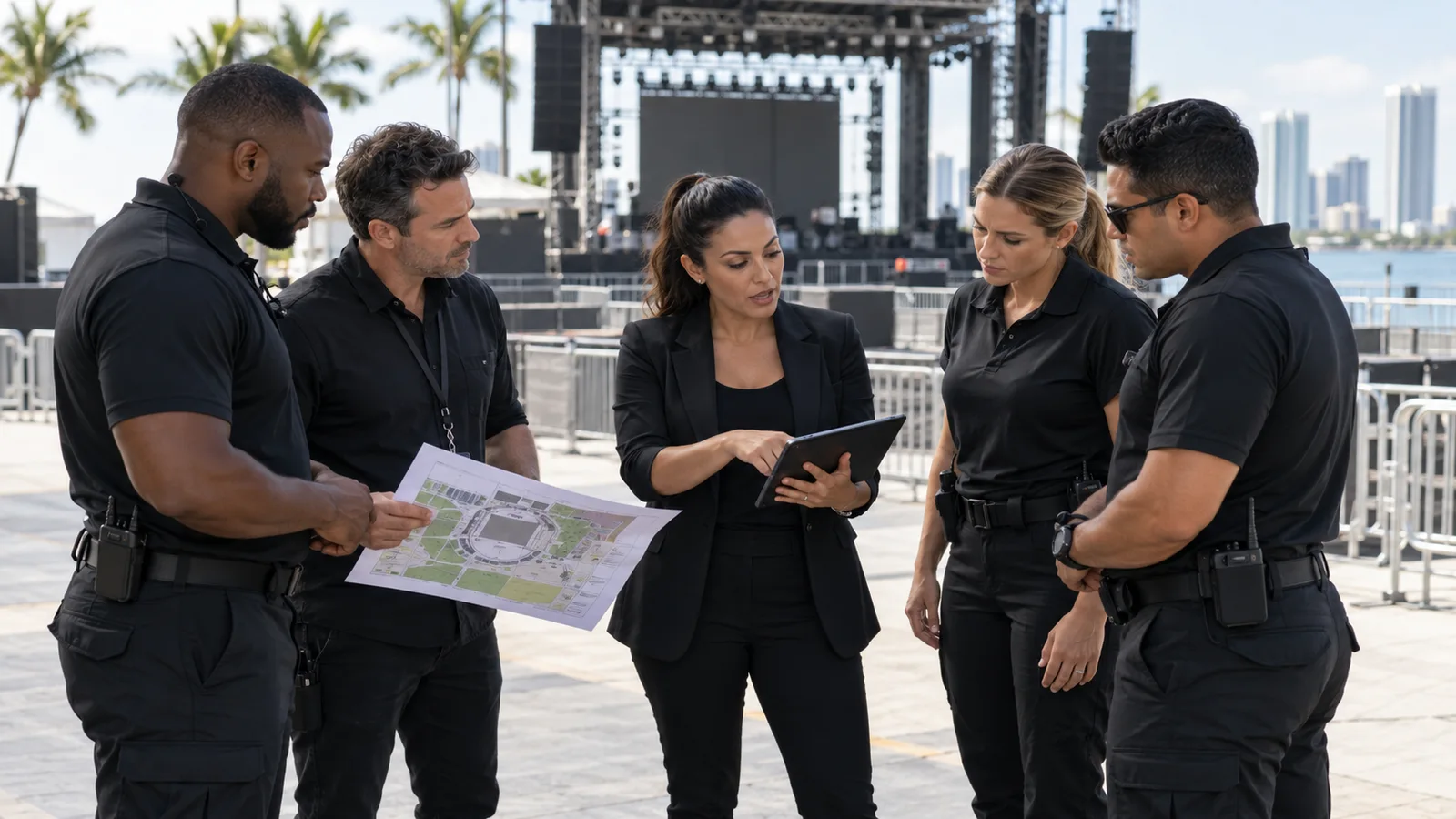
Turn a written plan into shared understanding
An event staff briefing should answer what each team must do, whom it should contact and what has changed. Reading the entire operations document aloud rarely accomplishes that. Focus the briefing on decisions people will face during their actual shift.
Bring together the relevant event, venue, registration and security leads. Confirm which instructions are authoritative and how later updates will be communicated. A briefing cannot repair an unresolved responsibility by simply telling everyone to coordinate.
Use a practical pre-opening agenda
Start with the event schedule and the current operating conditions. Confirm team roles, supervisors and alternates. Review the approved arrival and access process, the route for guest questions and the handling of exceptions.
Then cover communications, the relevant emergency-plan instructions, welfare or assistance contacts and the shift handover. Keep detailed sensitive arrangements limited to the staff who need them. Give late-arriving personnel a defined way to receive the same essential briefing.
Check understanding with short scenarios
Ask staff to explain what they would do if a guest’s name is missing, a vendor arrives at the wrong time or a supervisor is unavailable. The purpose is to expose gaps before the public arrives, not to embarrass an employee.
Resolve conflicting answers through the responsible lead. If registration believes security can approve guest additions while security expects registration to decide, settle that ownership immediately. Write the final instruction in the agreed reference rather than relying on memory of the discussion.
Test the communication path
Confirm that staff can reach the assigned contact using the approved method. Check that names, roles and channels match the current roster. Establish a backup route for an unavailable device or contact.
Use concise, factual messages and protect personal information. A public-facing team may need to request discreet assistance without broadcasting a guest’s private issue. The communication plan should support that need within the event’s actual equipment and procedures.
Finish with readiness and a handover standard
Ask each lead to identify any unresolved issue that affects opening. Assign a decision-maker and update time. Do not convert an unanswered safety or operational question into a reassuring “all good” merely to finish the meeting.
Record the briefing time, participants or teams covered, important changes and open actions. At shift change, brief incoming staff on current conditions and unfinished work. After the event, review which questions repeatedly required escalation and improve the next agenda accordingly.
Quick review checklist
- Roles and alternates confirmed
- Current access instructions
- Communication route tested
- Exceptions explained through scenarios
- Readiness concerns assigned to a decision-maker
Put the process into your site plan
Use this guide alongside our article on event security planning. To discuss the responsibilities, operating conditions and coverage your property or event needs, contact FSO Guard about the appropriate security scope.
Frequently asked questions
How long should an event briefing be?
Long enough to confirm the essential decisions and resolve role conflicts. Use a focused agenda and separate detailed role-specific instruction where needed.
Should temporary staff attend?
They need the instructions relevant to their assignment, including escalation and emergency procedures. Provide a defined briefing for late arrivals and replacements.
What should be recorded?
The teams briefed, significant changes, unresolved actions and the person responsible for each decision.