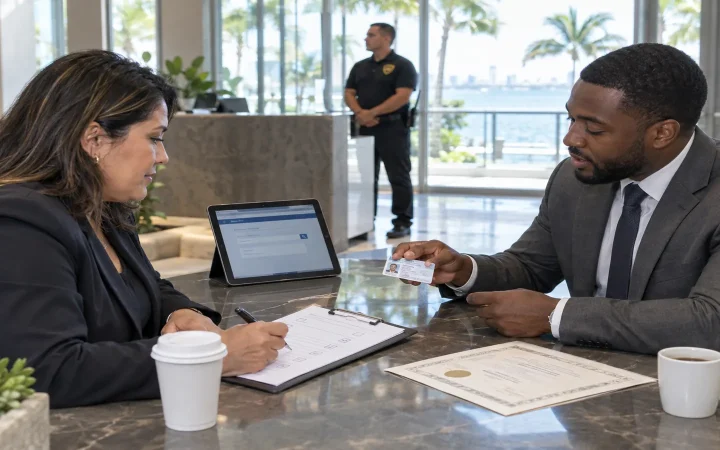

Make the planner the operational contact
Wedding security should support a welcoming celebration while keeping access decisions organized. The couple should not have to resolve routine entrance questions during the ceremony or reception. Name a planner, venue manager or other authorized representative and an alternate.
Share the event’s approved access plan with the venue and security lead. Define guest arrival arrangements, vendor responsibilities and who may approve a change. Keep sensitive family information limited to the people who need it for a specific decision.
Build a usable guest-list process
Choose a consistent verification method that matches the event. Confirm how plus-ones, spelling variations and late additions will be handled. Reception staff need a clear escalation route rather than permission to guess based on how someone is dressed.
Avoid displaying the full guest list publicly. If a name cannot be confirmed, provide a discreet waiting option and contact the designated host. A calm explanation protects the guest experience better than a discussion across the entrance queue.
Give vendors their own access instructions
Photographers, florists, musicians and caterers may need different arrival times and work areas. The vendor schedule should identify the company, responsible contact, approved task and departure or collection arrangements.
Do not treat a vendor credential as unrestricted access to private guest spaces. Equipment deliveries and late collections need the same clear ownership as setup. Coordinate with venue staff so security instructions do not conflict with loading, food service or emergency procedures.
Plan for difficult moments before they occur
The host should identify the authorized person for guest-list disputes, an uninvited arrival or behavior that concerns staff. Focus instructions on observable conduct and the agreed response, not personal labels. Any immediate threat requires the appropriate emergency action.
Security personnel should work within their training and assignment. The event plan is not a substitute for venue policies, responsible alcohol service or legal guidance. Avoid promising that a particular staffing number guarantees a trouble-free event.
Finish with an orderly handover
Coordinate the end of service, guest departures, transportation contacts and vendor collections. Confirm who remains responsible for personal items and outstanding venue issues after the couple leaves.
After the event, record relevant incidents and return access items through the agreed process. The useful review asks whether arrivals were smooth, exceptions reached the right decision-maker and staff understood the final handoff. Those details make security feel integrated into hospitality rather than added as an obstacle.
Quick review checklist
- Planner and alternate contact
- Guest-list change authority
- Vendor permissions and schedule
- Discreet exception process
- Departure and final venue handover
Put the process into your site plan
Use this guide alongside our article on event security planning. To discuss the responsibilities, operating conditions and coverage your property or event needs, contact FSO Guard about the appropriate security scope.
Frequently asked questions
Does every wedding need the same number of officers?
No. Scope depends on venue arrangements, attendance, access points, schedule and specific responsibilities. Define the work before discussing staffing.
Who should handle a guest-list dispute?
The designated planner or host representative should make the invitation decision, with reception or security applying the agreed process.
Should wedding vendors use the guest entrance?
Follow the venue’s approved arrangement. Vendors often need a separate authorization process even where arrival routes overlap.