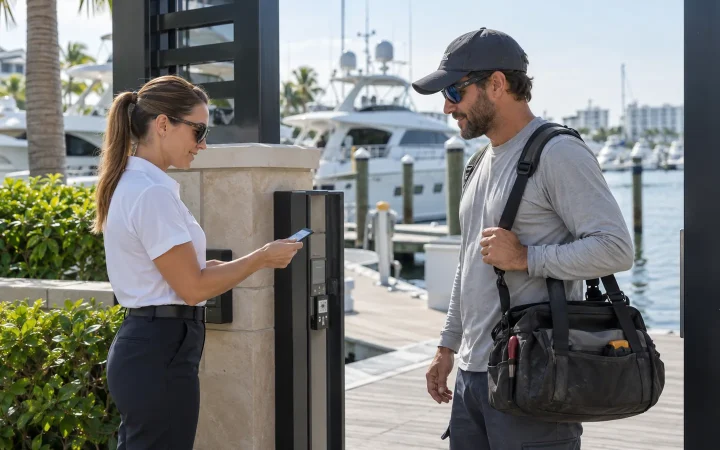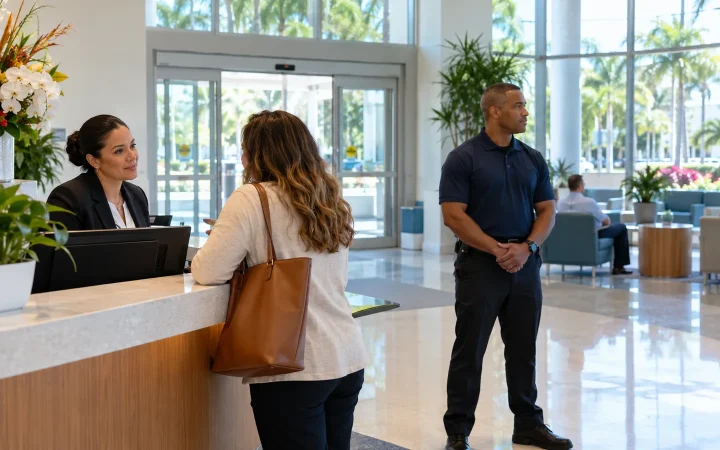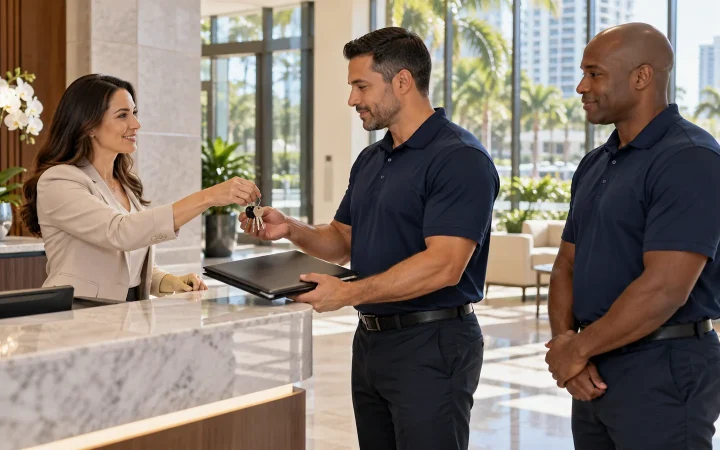
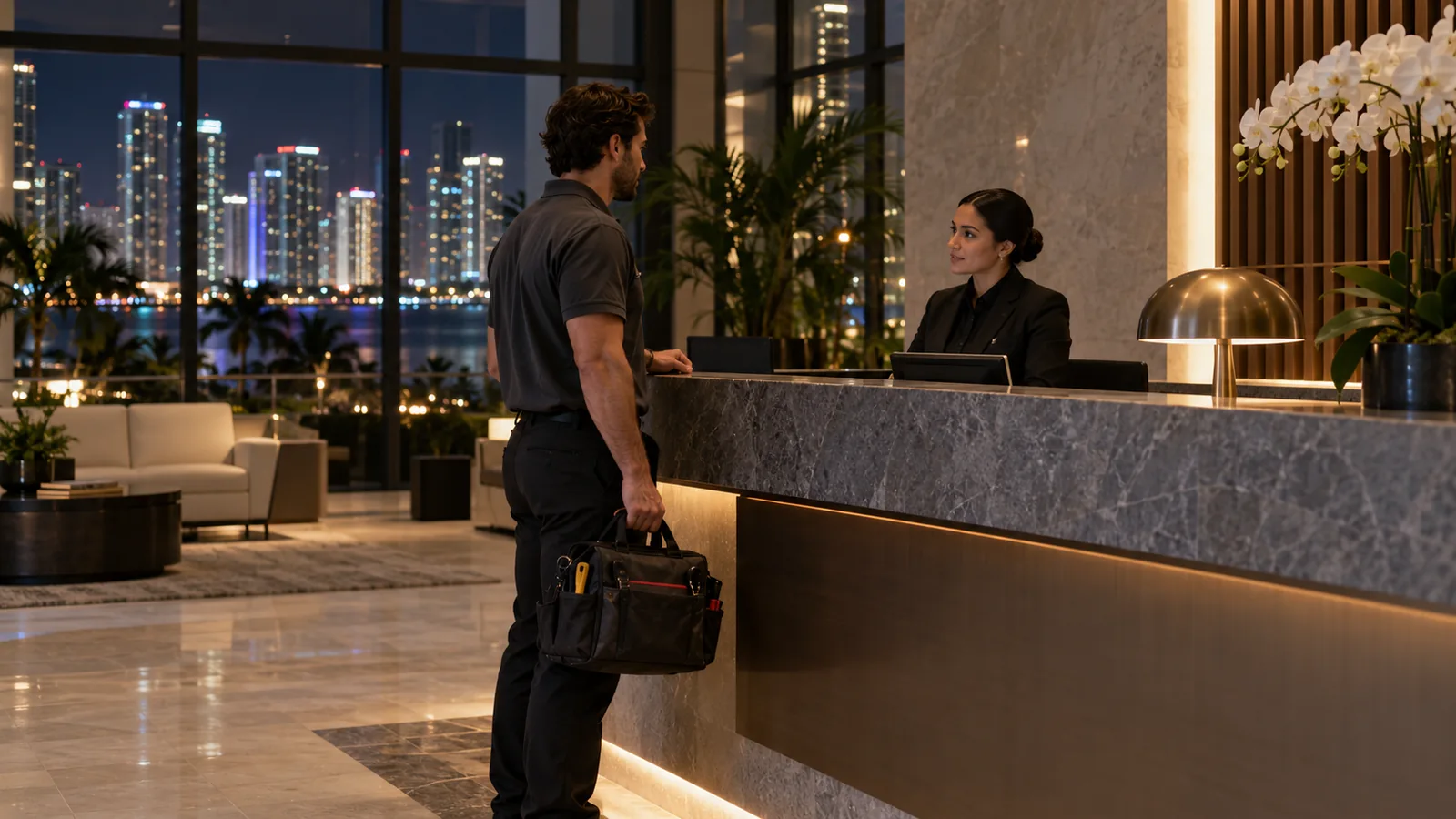
After-hours office access is easy to overlook until a contractor arrives at a locked entrance or an employee stays late while the building is being secured. The daytime receptionist has left, the tenant manager is unavailable and the guard has yesterday’s work schedule. A simple authorization process can prevent that uncertainty.
For a Miami office or shared commercial building, define who may approve entry, which areas are included and when access ends. Keep tenant approval separate from building approval where both are required. An access card should support that decision, not replace it.
Define what changes after normal hours
List the hours during which the after-hours procedure applies. Include weekends, holidays and temporary closures. Explain which entrance remains available and how legitimate arrivals obtain assistance. Do not post detailed security schedules or access codes on a public notice.
Ask each tenant to name an authorized contact and backup. Decide how approved changes reach reception or security and how an outdated instruction is withdrawn. A text from an unfamiliar number claiming to be the manager should not become an automatic approval.
Use an authorization record with an end time
- Requesting tenant or department and named approver.
- Authorized person or company, using only necessary identifying details.
- Purpose of the visit and designated work area.
- Approved arrival window and expected completion time.
- Any required host or escort and their contact route.
- Responsibility for keys, temporary credentials and departure confirmation.
- Instructions for a delayed arrival, extended job or unavailable contact.
A recurring cleaning or maintenance assignment needs periodic review. Do not let a temporary project quietly become permanent access. Match credential permissions to the approved arrangement and assign the technical changes to authorized building or IT personnel.
Separate access approval from permission to perform work
Admitting a contractor does not authorize every task they may wish to perform. Work permits, building-system changes and specialist safety controls belong to the appropriate management and technical teams. Security should know how to verify that the required approval exists without being asked to certify technical work.
A delivery is different again. Identify the receiving contact, permitted drop-off location and what happens if nobody is available. Avoid leaving goods in an emergency route or allowing an arrival into tenant space simply because the building is quiet.
Plan the exception before the phone goes unanswered
Give staff a backup contact and an approved waiting arrangement. If authorization cannot be confirmed, follow the documented process. Staff should record the unresolved request and who was contacted. They should not invent permission because a contractor has visited before.
For example, a scheduled maintenance visit runs past its approved window. The responsible tenant confirms the extension through the established channel, building management checks any relevant operating constraint, and security receives the updated instruction. This is a sample workflow, not an actual client event.
Close the visit and the information loop
Confirm departure as required by the site procedure, account for issued equipment or credentials and record unresolved matters for the next shift. An authorized worker remaining inside should not disappear from the handoff when one officer goes off duty. Follow emergency egress requirements throughout; never trap people inside to enforce a closing time.
The FTC’s personal-information guide includes end-of-day protection of sensitive papers and appropriate building access controls. Tenants remain responsible for securing their records and workstations; an evening lobby post does not do that automatically.
Review the procedure using actual exceptions
Look at late arrivals, missing approvals, unrecovered temporary credentials and unanswered contact attempts. Resolve the cause with the tenant rather than repeatedly asking guards to work around it. Update post orders when the approved arrangement changes.
FSO Guard’s commercial security services can support access coverage around a building’s operating schedule. Define the entrance duties, relief arrangements and reporting scope. For the related issue of people following others through an entrance, see our tailgating prevention guide.
Frequently asked questions
Does an access card automatically authorize after-hours work?
No. The person still needs the authorization required by the building and tenant, including any area or time restriction.
Who should approve a contractor staying late?
Use the designated tenant and building approval process. Security should receive the confirmed change through the established channel.
What should be handed over at the end of a shift?
Authorized people still inside, open exceptions, issued credentials or equipment, relevant contact instructions and any unresolved follow-up.