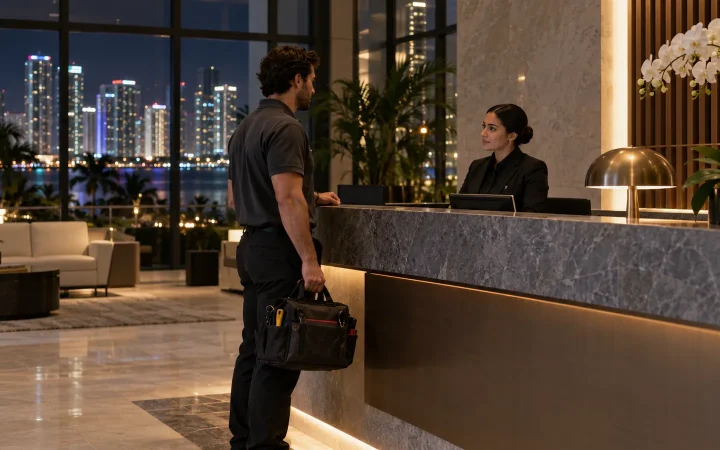
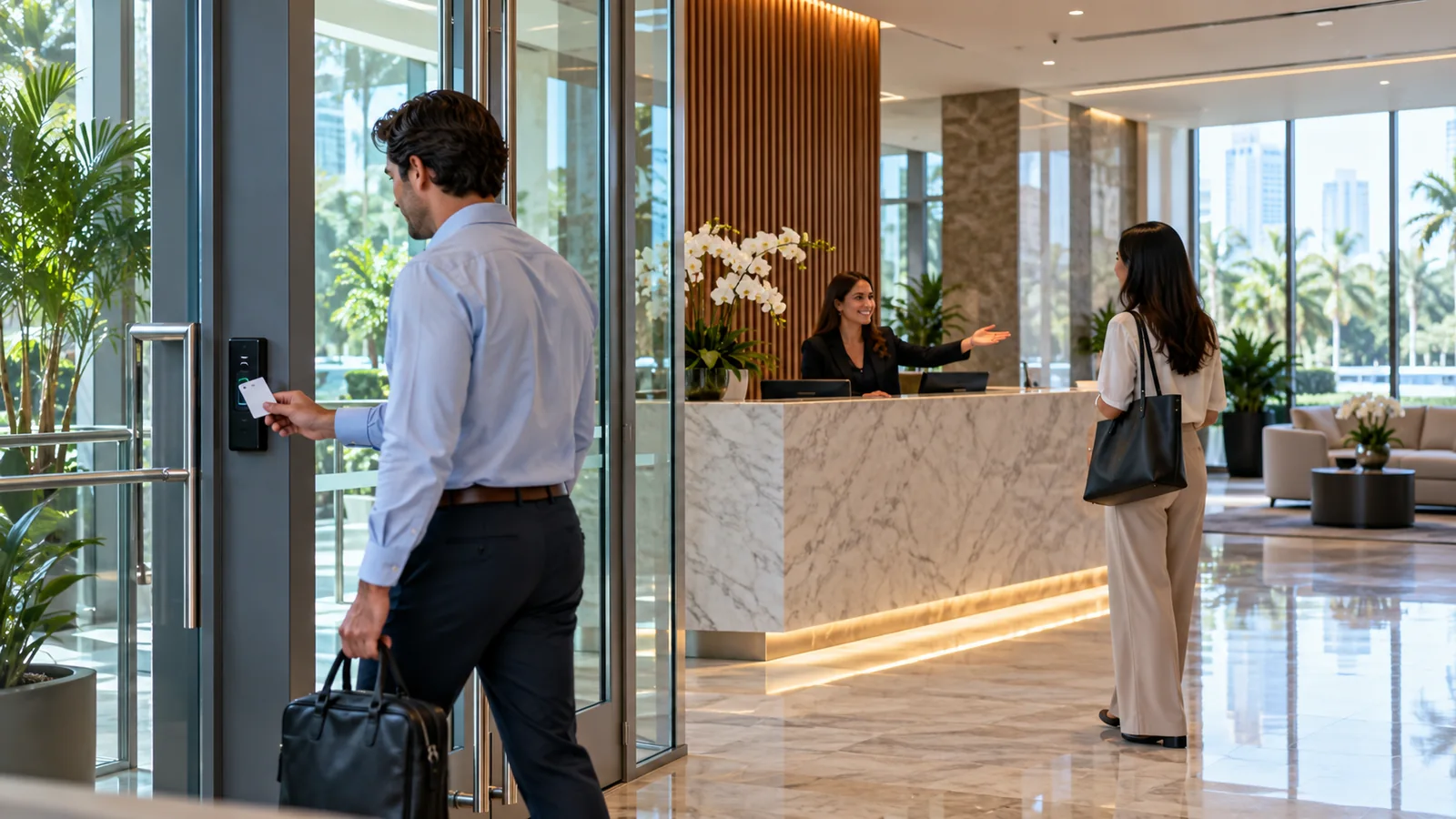
Tailgating in security means entering a controlled area by following an authorized person without completing the required access check. It can happen when somebody holds a door out of courtesy, an arrival looks familiar or a visitor is unsure where to check in. Not every occurrence reflects malicious intent, but every unresolved entry creates an authorization question.
For a Miami office, the solution should make the correct route easy to follow. A badge reader cannot explain the visitor process, and employees should not be expected to physically block a stranger. Combine clear procedures, suitable equipment and a safe way to request help.
Decide where authorization is required
Map the boundary between public reception and staff-only space. In a shared building, distinguish the landlord’s lobby access from each tenant’s suite access. A person may be permitted in the building without being authorized for every office.
Write the rule for staff, guests and contractors. Explain what an employee should do when their card fails or they arrive with a visitor. If the legitimate route is confusing or inaccessible, people will improvise. Coordinate the design with qualified building personnel so access measures preserve emergency egress and accessibility.
Give employees a safe, courteous response
A short phrase can help: “Reception can check you in; the visitor desk is just there.” The purpose is to direct the person to the approved route, not to accuse them. Where the situation feels unsafe or the person ignores the process, staff should move to safety and contact the designated security or management channel.
Do not encourage employees to chase someone, grab a door against them or demand personal documents in a corridor. The appropriate response depends on the site procedure and circumstances. Immediate threats require emergency assistance, not a debate about badge policy.
Check the process, not just the reader
- Can a first-time visitor identify the check-in point?
- Does reception have a current way to confirm a host’s authorization?
- Is there an approved process for a forgotten or failed staff credential?
- Can deliveries and contractors reach their designated receiving point?
- Does a held-open or faulty door reach someone who can act?
- Do temporary workers receive the same practical briefing as permanent staff?
- Can an employee report an unverified entry without confronting the person?
The FTC’s business information-security guide recommends appropriate building access controls and clear employee instructions for unfamiliar people on the premises. Put the instructions into ordinary staff briefings, rather than relying on a policy stored in a rarely opened folder.
Do not treat a badge as unlimited permission
A visible badge should match the site’s authorization system, permitted area and relevant time window. A visitor card from another tenant or a previous day may not establish current permission. Staff need a way to check exceptions through reception without disclosing occupant details to the next person in line.
Review recurring contractors and temporary access periodically. When a contract or assignment ends, the responsible manager should confirm the required access change. For evening work, use the separate after-hours office access checklist.
Review patterns without profiling visitors
Record observable access events: a door failing to close, repeated credential faults or uncertainty about the visitor route. Do not classify somebody as suspicious based on appearance, nationality or disability. Apply the approved process consistently and arrange reasonable assistance through the appropriate staff.
A useful review asks why the boundary failed. If people repeatedly follow coworkers because their cards have stopped working, address the credential process. If guests bypass reception because signs direct them to a tenant corridor, correct the signs. More warnings do not repair an operational fault.
Turn the rule into an assignment
Record the entrance duties, escalation route and relief arrangements in security post orders. FSO Guard’s commercial security services can support the staffed part of that process. Ask for a scope that identifies who verifies access and who resolves exceptions, rather than assuming that an officer at the door controls every entry decision.
Frequently asked questions
Are tailgating and piggybacking always different?
Organizations use the terms differently. Define the behavior in your policy: entry into a controlled area without completing the required authorization process.
Should staff physically stop someone following them inside?
Employees should follow the site’s safe reporting procedure and avoid confrontation. A courteous referral to reception may be appropriate when safe; immediate danger requires emergency help.
Will a new card reader solve tailgating?
Equipment can support access control, but visitor routing, credential maintenance, staff instructions and an assigned response remain necessary.