

A security patrol report is valuable when a manager can use it to make a decision. A long list of timestamps may confirm activity, but it does not explain whether the assigned checks were completed or a recurring problem was resolved. Use this guide to review reports for a Miami commercial property, residential community or construction project against the actual post orders and service scope.
Start with the assignment, not the number of entries
Have the agreed coverage window, assigned areas and escalation instructions beside the report. Identify what the officer was expected to check and what was outside the assignment. An exterior patrol does not imply that every interior room was inspected.
A daily activity report summarizes a shift; a patrol entry records a particular round or observation; an incident report documents a specific event in more detail. Your provider may use different names. Agree on the purpose of each record so an urgent issue is not buried in a routine summary.
Check these six elements in a patrol report
- Identification: correct property, date, coverage period and accountable officer or team identifier.
- Completion: assigned checks recorded clearly, including areas that could not be checked and the reason.
- Observation: what was actually seen or heard, with location and time, separated from assumptions.
- Action: what the officer did within the approved scope and who was contacted.
- Status: resolved, awaiting management, awaiting maintenance or another specific next step.
- Traceability: relevant incident reference or supporting record available to authorized reviewers.
Treat checkpoint data as supporting evidence
A checkpoint scan or GPS record can support a report, but neither proves that every required task was performed. Read the observation and outcome alongside the timestamp. If an expected record is missing, ask whether the task was missed, the device failed or a documented instruction changed the route.
Do not judge performance solely by the number of scans. One meaningful observation with a completed escalation may matter more than several repetitive entries. Review unexplained patterns with the supervisor before drawing conclusions, and preserve the original record when a correction is added.
Compare a vague entry with an actionable one
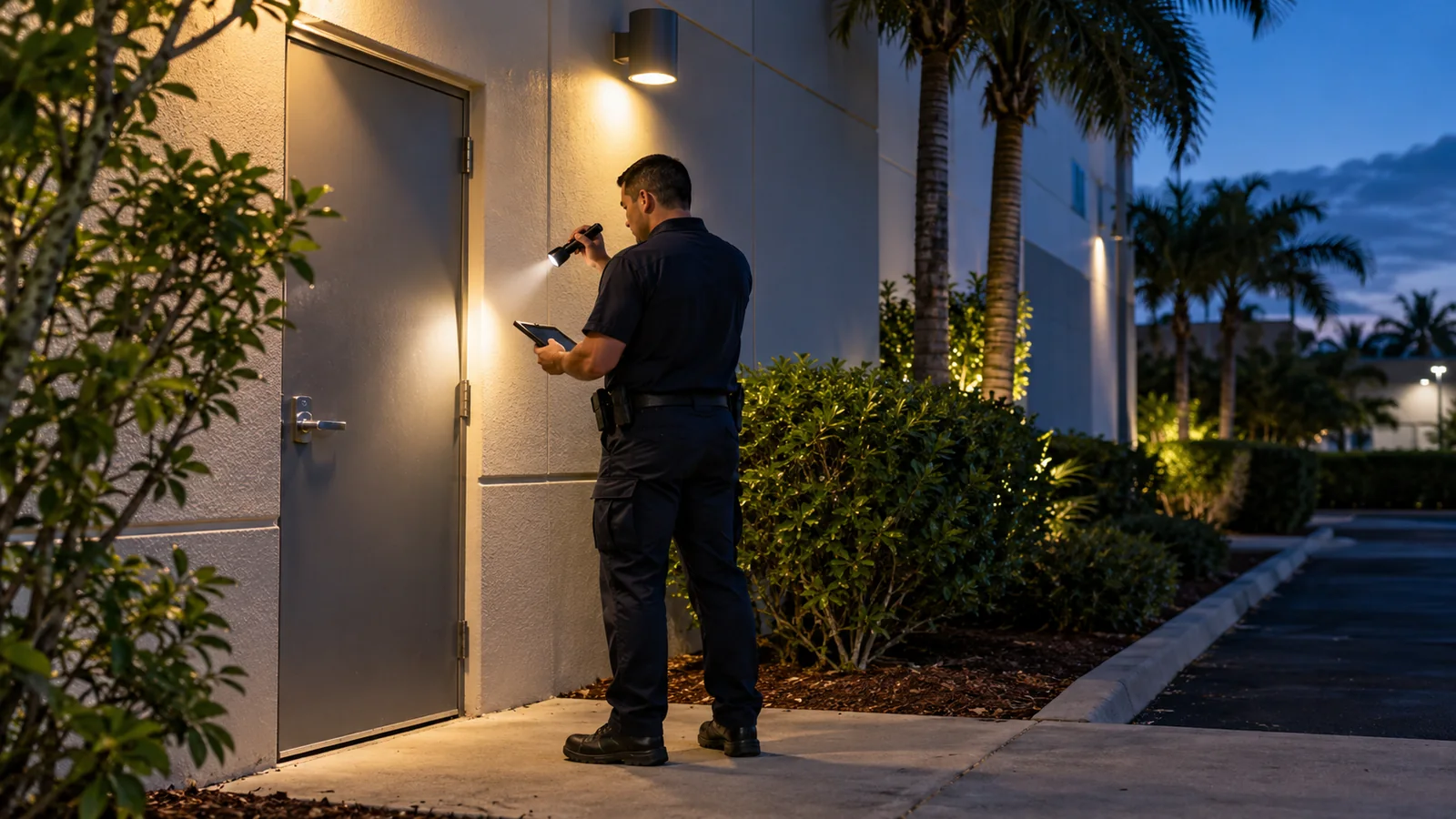
“Door problem. Manager advised.” leaves important questions unanswered. A clearer sample is: “21:15 — east service door did not latch during the assigned exterior check. Duty manager contacted at 21:18. Area monitored according to instructions; maintenance review remains open. Reference: follow-up item A.” This is a fictional example, not a client incident.
The better entry identifies the observation, time, action and unresolved responsibility. It does not speculate about who caused the fault or claim the building is completely secure. If photographs are appropriate, attach only what is needed and avoid capturing unrelated personal information.
Turn unresolved items into a follow-up list
For each open item, record an owner, next action and review date. A damaged light might belong to maintenance; a disputed access instruction may need management approval. Security staff should not be held responsible for closing a repair they have no authority to perform.
At the next review, check whether the assigned person acknowledged the item and whether completion was verified. Repeated “manager advised” entries without progress indicate a handoff problem worth addressing. Keep urgent escalation separate from the scheduled report review; emergencies should follow the property’s response instructions immediately.
Share reports with the right people
Reports can contain access details, resident information and photographs. The FTC’s Start with Security guide recommends minimizing retained sensitive information and restricting access. Send detailed records through the approved channel to people who need them; provide a limited summary for a broader board or management audience.
Agree on a retention process and a way to request corrections without silently rewriting the history. Store route details and vulnerabilities in controlled records rather than public meeting materials. A report should be useful without becoming an unnecessary exposure of the property’s arrangements.
Use the review to improve the next assignment
Bring recurring exceptions, unclear instructions and outstanding repairs to the supervisor. Update the agreed instructions when the property changes, then check that the next report reflects the new task. This closes the loop between management decisions and on-site work.
If you are defining a new reporting scope, see our mobile security patrol services. Share the property type, hours, areas to be checked and preferred escalation contact. Ask for reporting expectations to be defined as part of the assignment rather than assumed after service begins.
Reference: FTC Start with Security