
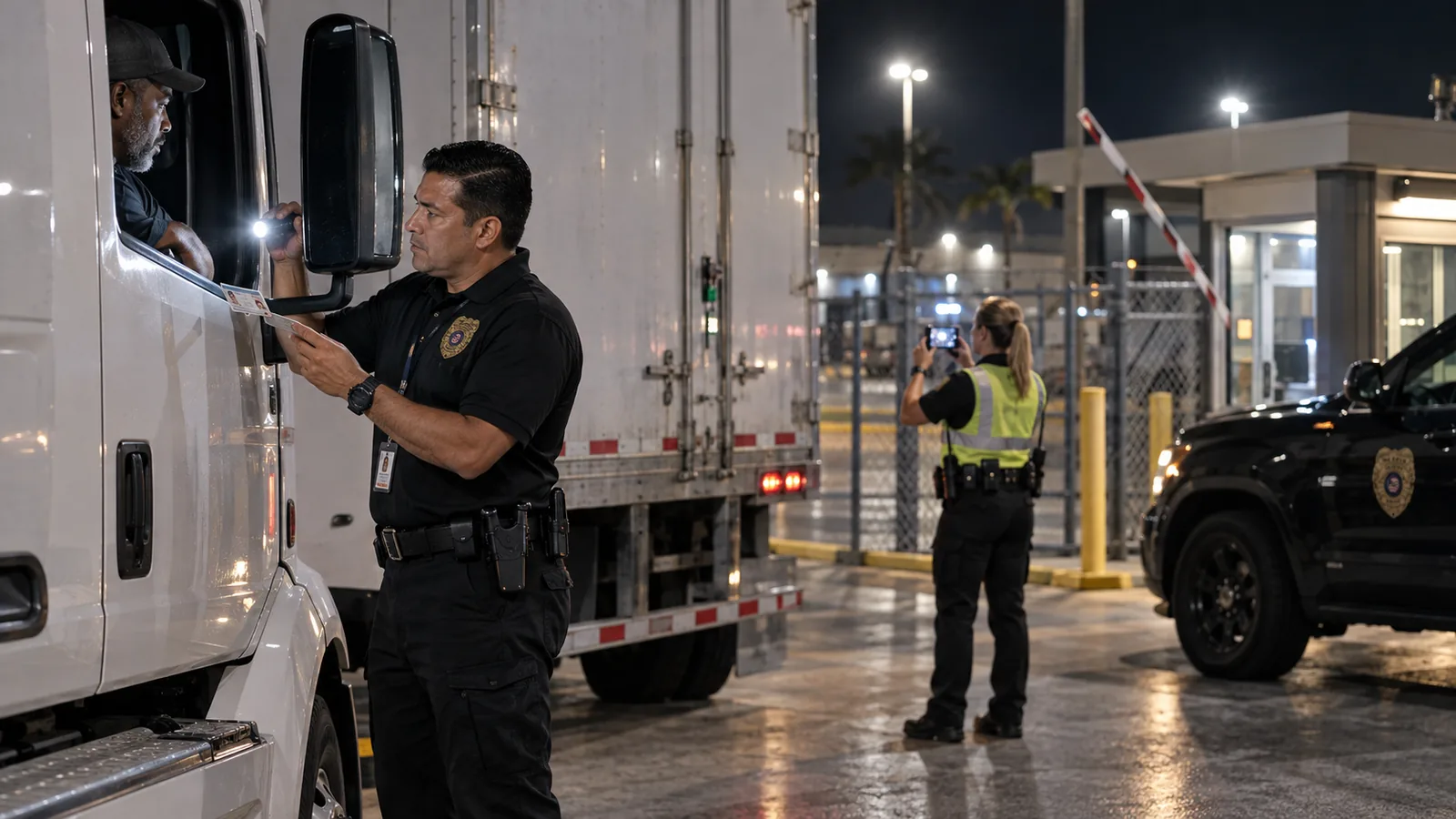
A freight forwarder operating a 60,000-square-foot warehouse near Miami International Airport, in the industrial blocks of Doral, called FSO Guard after a third loss in two months. Pallets of consumer electronics were leaving the building between the end of the second shift, around 11 p.m., and the arrival of the morning crew. The cameras showed trucks at the dock at night, which was normal for the business, and nothing that looked like a break-in. Insurance had paid twice and was asking questions.
Client details are confidential. Names, the address and the dates are withheld and some figures are rounded. The profile reflects overnight warehouse assignments FSO Guard runs in Doral and Medley.
What we found on the site visit
The building had one truck gate with a keypad, twelve dock doors, a yard with room for about thirty trailers, and a small side door near the break room that was propped open with a fire extinguisher when we arrived. The keypad code had not changed in two years and was known to at least forty current and former drivers. Trailers arrived overnight with seals but nobody recorded the seal numbers until the morning. The night supervisor worked alone.
The client wanted a guard at the gate. We recommended two officers: one armed at the gate to control vehicles and one on foot patrol inside and around the building, with checkpoints, because the pattern pointed to somebody who already knew the site.
Staffing and post orders
- Gate, Class G armed officer, 10 p.m. to 6 a.m. Every vehicle in and out logged with plate, driver’s name and ID, trailer number and seal number on arrival and departure. Nobody through the gate on the old keypad code; the code was changed on day one and the officer opened the gate.
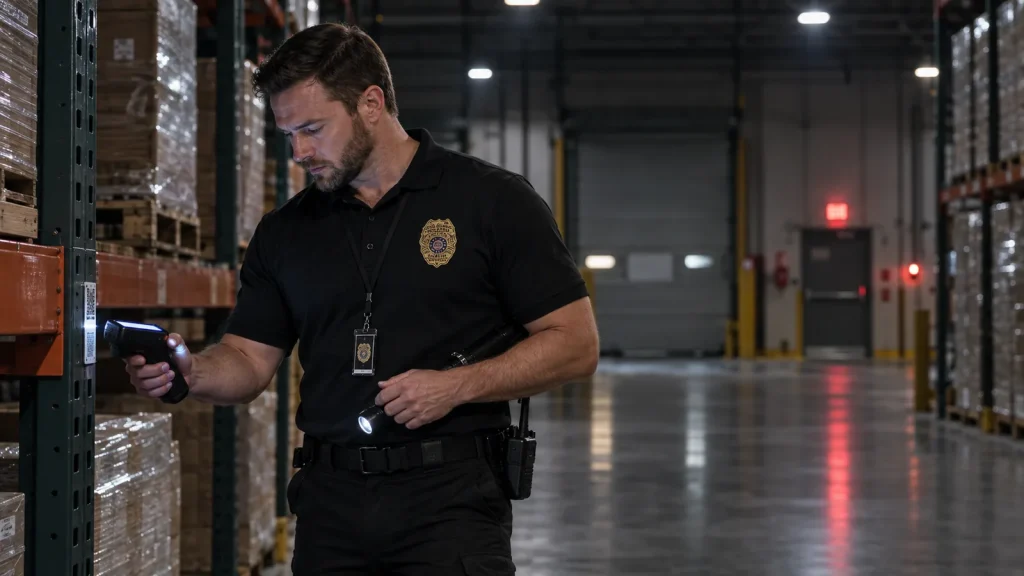
- Patrol, Class D officer, same hours. Fourteen checkpoints at the dock doors, the side door, the fuel tank, the yard corners and the roof access ladder, scanned on an irregular route at least once an hour. Camera feeds monitored from the guard post between rounds.
- Supervisor. A named FSO Guard supervisor visited twice a week unannounced and was the client’s single point of contact.
- Reports. A daily activity report and the vehicle and seal log emailed to the operations manager by 7 a.m.
What happened in the first three weeks
The losses stopped the first night, which told us something on its own. In the second week the seal log showed a trailer that arrived with one seal number and was recorded, by the client’s own morning team, with a different one. The gate officer’s log, with a time-stamped photograph of the seal on arrival, made the discrepancy impossible to argue with. In the third week the patrol officer found the side door propped open again at 1 a.m., closed it, logged it and, on the next round, found it open again. The camera covering that corridor had been turned a few degrees toward the wall.
We did not investigate the client’s employees; that was not our assignment and the client chose to handle it internally with their own HR and counsel. What FSO Guard delivered was a clean, time-stamped record of vehicles, seals, doors and camera positions that let the client see where the problem was. The losses did not return.
What the client received
Beyond the daily reports: a written review after 30 days with the vehicle and seal data summarized, a list of physical fixes (an alarm contact on the side door, a new camera position, a keypad tied to individual codes) and a recommendation to reduce to one armed officer plus a mobile patrol drive-by once the fixes were in place. The client made the fixes and kept both officers anyway, then added a day-shift gate officer six months later when the business grew.
What we would do differently
We would ask for the seal procedure on the first visit, not the second. Most of what solved this assignment was already in the client’s process; it simply was not being written down at night. Now the warehouse site-visit checklist has a line for it.
Related services
This assignment used our warehouse and logistics security service with armed officers at the gate, foot patrol with checkpoints as in our mobile patrol program, and the reporting standard we apply to every industrial site. If losses point to a person rather than a gap, our licensed corporate investigators can take the next step within Florida law. To arrange a site visit in Doral or anywhere in Miami-Dade, call 888.881.8099 or send a request. More assignments: all case studies.