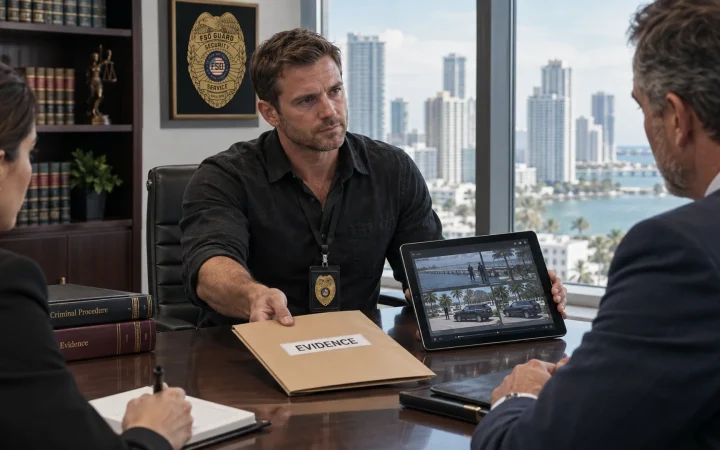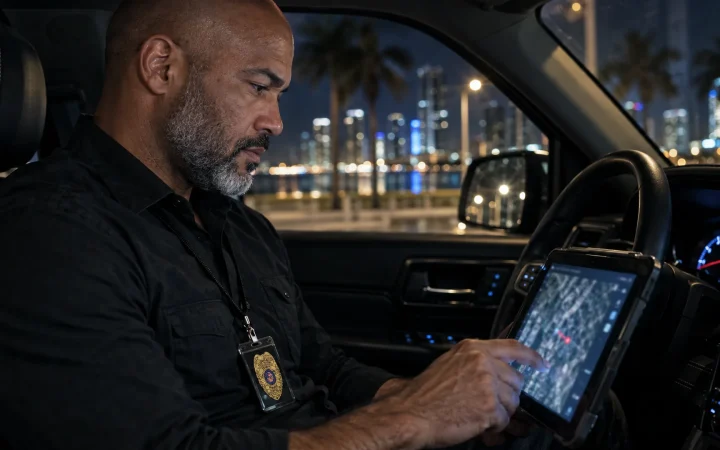

Winning a case, agreeing a divorce settlement or extending credit is a decision about money you cannot see. Debtors move property to relatives, executives hide interests behind LLCs, spouses “forget” accounts, and partners turn out to own less — or far more — than they claimed. FSO Guard’s licensed investigators provide asset search investigations in Miami and throughout Florida that show you what a person or company actually owns, where it is, and how it can be reached lawfully.
What an asset search finds
- Real estate — properties owned in the subject’s name, through spouses, relatives, trusts or companies; purchase dates, prices, mortgages, liens and recent transfers, including suspicious quitclaims made after a dispute began.
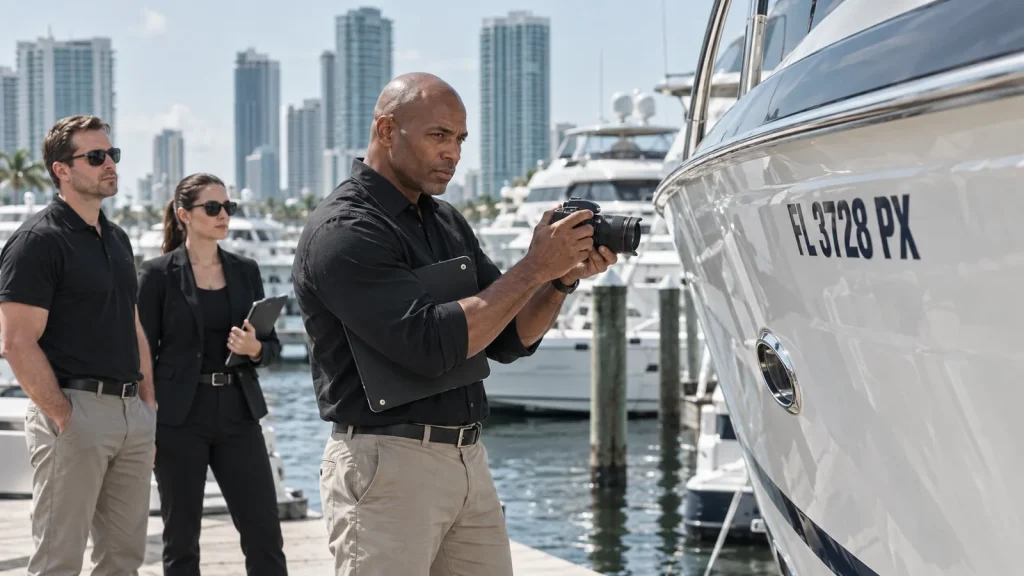
- Vehicles, vessels and aircraft — registrations and titles located lawfully with a documented permissible purpose under the Driver’s Privacy Protection Act.
- Business interests — corporations and LLCs where the subject is an owner, officer, director or registered agent in Florida and other states; related and successor entities; fictitious names; the people behind the company.
- Judgments, liens and bankruptcies — what the subject owes and to whom, UCC filings that show financed equipment and secured creditors, tax warrants, foreclosures.
- Indicators of financial accounts — lawful indicators from court files, UCC records, business filings and public sources that point to where accounts likely exist, for your attorney to pursue through legal process.
- Lifestyle evidence — when a subject claims to have nothing, documented surveillance of vehicles, residences, boats and spending patterns can contradict the claim and support a motion.
When you need one
- Before litigation — is the defendant collectible? A modest search can save a year of legal fees on an uncollectible judgment.
- Judgment collection — turn a paper judgment into a plan: what to levy, where to garnish, which transfers to challenge.
- Divorce and family law — hidden accounts, undisclosed businesses, property parked with relatives, unreported income that changes alimony and child support.
- Business disputes and due diligence — verify a partner’s or counterparty’s net worth before you invest, lend or sign; see also corporate investigations and due diligence.
- Probate and estates — locate assets of a decedent, or assets a fiduciary may have moved.
- Fraud recovery — trace where money went after an embezzlement or scam, together with our fraud investigations.
How we work — and what we will not do
Every search is performed under a written agreement, for a lawful purpose, using public records, court files, licensed-investigator databases with a documented permissible purpose, and field verification. We do not access bank or brokerage accounts, obtain credit reports without a permissible purpose, pretext financial institutions or use any method that would make the findings unusable in court. If a promise sounds like magic — “we’ll get his account balances by Friday” — it is either a crime or a fabrication, and we will tell you so. Our guide to what a private investigator can and cannot do explains the rules.
The report
You receive a written report organized by asset class, with sources, record copies, a timeline of transfers, a summary of the subject’s apparent financial position and specific recommendations for counsel — which properties to record a judgment lien against, which entities to subpoena, which transfers look fraudulent. Reports are prepared to support post-judgment discovery, depositions in aid of execution and fraudulent transfer actions, and our investigators testify when required.
Related investigative services
Skip tracing and process service when the debtor cannot be found; background checks on the people behind the assets; litigation support for attorneys; and surveillance to document lifestyle and activity.
Asset searches in Miami, Fort Lauderdale and Palm Beach
FSO Guard Security Company is a Florida-licensed private investigative agency (License A 1000095) based in Hollywood, FL, working with attorneys, businesses and individuals across Miami-Dade, Broward and Palm Beach counties and, through partner agencies, nationwide. Investigators work in English, Spanish and Russian. Call (786) 659-5011 or message us on WhatsApp for a confidential consultation and a written quote.